Music as a Builder of Security and Trust: The Experience of the National Guard Band
Inga Meijere, a member of the Latvian National Guard Band, argues that culture strengthens societal resilience and that cooperation between military bands builds trust among allies. She notes growing demand for professionals who combine creativity with strategic thinking.
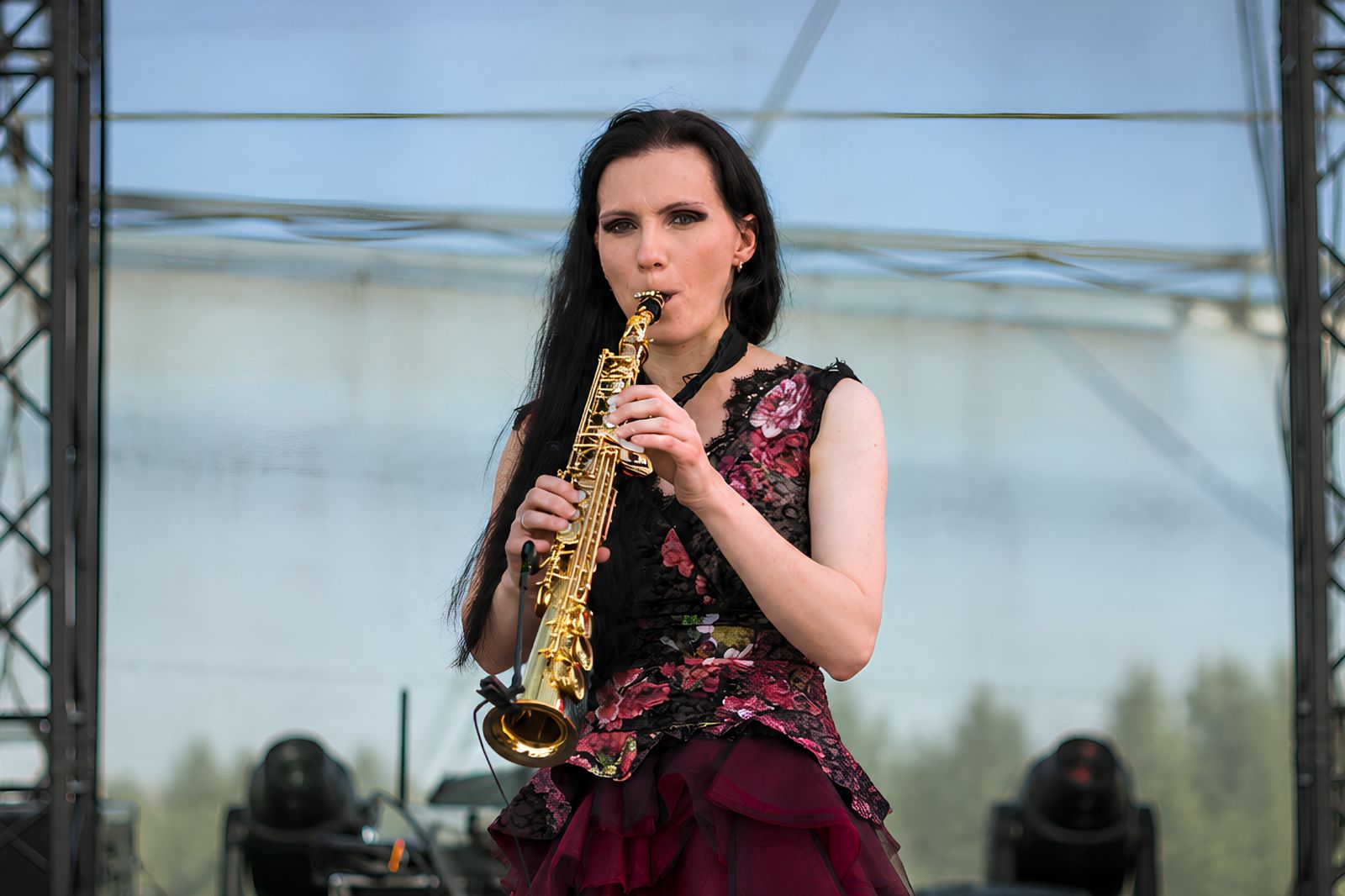
Discussions of national security often focus on military capabilities, with less attention paid to the role of culture in societal resilience. Musician and composer Inga Meijere, who plays in the Latvian National Guard Band, stresses in an opinion piece that security also rests on cohesion, mutual trust and shared values, and that culture helps reinforce them by creating an emotional bond between people and countries.
Military bands as ambassadors
The author notes that military bands represent not only the armed forces but also their country, its history and its traditions. In working with bands from NATO and other partner countries, music becomes a shared language that helps build long-term cooperation.
One example is the National Guard Band's visit to Southern California last November together with the U.S. Air Force Band. It included concerts for Latvian communities in Los Angeles and San Diego, as well as for American audiences. This summer the band worked with the Michigan National Guard Band, jointly taking part in the Latvian Song Festival in the United States.
Discipline and creativity
Meijere believes that playing in a band teaches discipline, responsibility and teamwork, since excellent results cannot be achieved alone. In her view, discipline and creativity are not opposites: discipline makes it possible to carry out creative ideas. Before each project, she says, one must ask why these particular partners are meeting, what message is to be conveyed and what long-term value the cooperation will create.
Studies and a strategic approach
The author is studying in the master's programme "International Cultural Project Management" at the University of Economics and Culture and has completed her first year. She says her studies have helped her structure what she previously did intuitively. Knowledge of intercultural communication, project and strategic management, and protocol has proved useful when working with partners from the United States, Canada, the United Kingdom, Spain, Denmark, Germany, the Baltic states and other NATO members.
Meijere concludes that Latvia does not lack talented people, but it increasingly needs professionals who can connect the creative sector with strategic thinking and act as a bridge between an idea and its realisation.

/nginx/o/2026/10/07/17960060t1h30d7.jpg)