Oil prices dip slightly amid Iranian threats to close Strait of Hormuz
Oil prices fell slightly on Sunday even as Iran threatened to shut the Strait of Hormuz and new US sanctions loom. Flow through the strait remains at roughly half its pre-war volume.
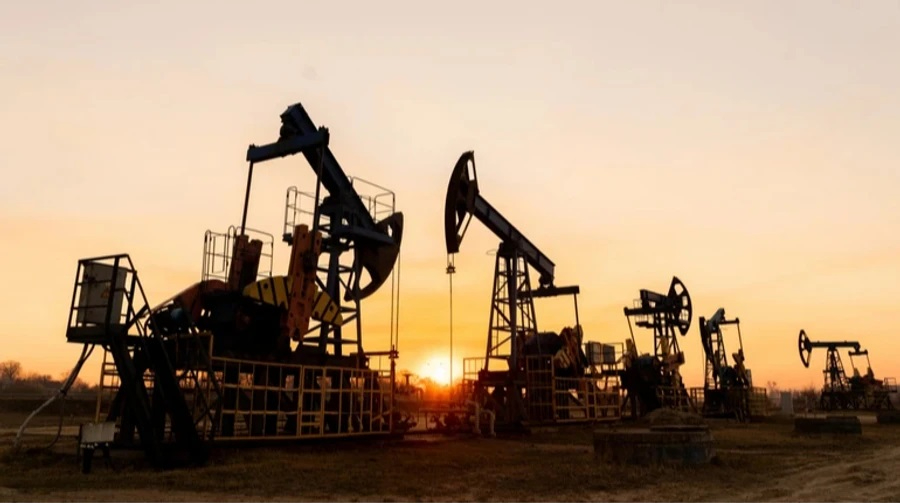
Oil prices edged lower on Sunday, with benchmark Brent crude falling 0.66% to $93.77 a barrel and US crude dropping 0.68% to $86.47 a barrel, CNN reported.
Iranian threats and new sanctions ahead
Iranian authorities have threatened to halt all oil shipments through the Strait of Hormuz and tighten its blockade if neighboring countries help the United States weaken Tehran's economy. The US is expected to impose additional sanctions on Iran on Monday, as peace negotiations remain stalled.
Sharp drop in oil flows
Before the war, roughly 20 million barrels of oil passed through the Strait of Hormuz daily, accounting for about 20% of global oil production. The US Department of Energy reports that only 8 to 9 million barrels now pass through the strait each day. Iran controls the strait's northern section.
Experts say tracking oil flows has become increasingly difficult, as vessels switch off their transponders or sail under foreign flags to navigate the difficult passage. According to MarineTraffic data, at least six vessels crossed the Strait of Hormuz in the past 24 hours, including three tankers and two cargo ships heading into the Gulf of Oman, with one tanker entering the Persian Gulf. At least 44 vessels passed through the Bab-el-Mandeb strait, including four tankers and 16 cargo ships bound for the Gulf of Aden, while nine tankers and 15 cargo ships entered the Red Sea.
Gasoline prices and markets
Despite elevated oil prices, US gasoline prices have held steady over the past month. According to AAA, the national average stood at $4.09 per gallon on Sunday — about 37.5% higher than before the war began. Stock futures opened unchanged for a second consecutive Sunday.
As a reminder, US President Donald Trump said on August 22 that he considers the Strait of Hormuz to be American territory, and that Washington is earning billions of dollars thanks to US actions against Iran and control over the region.