Two of NASA's four Mars missions pause science operations over technical problems
NASA's Perseverance rover and Odyssey orbiter have both halted science work in recent weeks because of separate technical faults. Both are operating beyond their original design lifetimes.
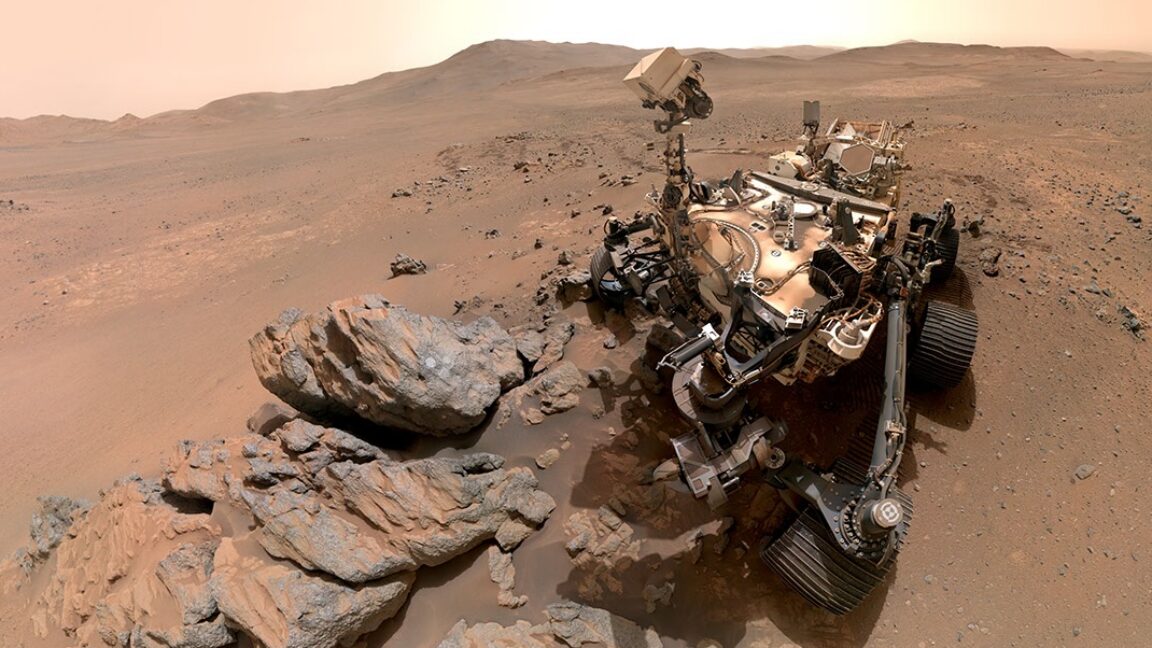
Two of the four NASA missions operating at Mars, the Perseverance rover and the Odyssey orbiter, have suspended science operations in recent weeks after separate technical problems. The US space agency hopes the outages are temporary. Both spacecraft are working well past their original design lifetimes, which raises questions about the future of Mars communications and exploration infrastructure.
Perseverance loses its radios
Perseverance is in its sixth year on the Martian surface, collecting rock and soil samples for eventual return to Earth. It is now studying the rim of a crater that once held an ancient lake. The rover has two redundant UHF radios for sending data through relay orbiters, plus a slower X-band system for direct communication with Earth.
One UHF radio was unresponsive when the rover powered up on October 30. That triggered an automatic switch to the backup and put the rover into safe mode. Engineers at NASA's Jet Propulsion Laboratory then found the backup was transmitting at about half its expected power. The team has stopped using both radios while it evaluates the causes. Data now flows directly to Earth in X-band at a much lower rate. Science work was paused as a precaution, and managers will first try to get the backup radio running. NASA hopes the rover can resume science by the end of November.
Last month, Perseverance set a record for the farthest distance driven by any vehicle on another planet, passing the 45.16-kilometer mark held by the Opportunity rover.
Odyssey nearly out of fuel
Odyssey has orbited Mars since 2001. In early November, one of its four reaction wheels, used for pointing, stopped spinning; the first had failed in 2013. The craft needs at least three wheels, otherwise it must rely on hydrazine thrusters to stay oriented. Without three healthy wheels, engineers estimate fuel would last one to two months. Previously, managers expected operations to continue through at least the end of 2028. Initial troubleshooting has had some success, but more testing is needed.
Aging infrastructure
Odyssey is one of four NASA orbiters relaying data from the Perseverance and Curiosity rovers. NASA lost contact with its MAVEN orbiter last December, and an investigation found no specific root cause. In September, NASA awarded Blue Origin a $700 million contract for a Mars Telecommunications Network orbiter, but the work is on hold after Rocket Lab filed a protest with the Government Accountability Office. A ruling is expected next month.