NASA chief praises Blue Origin's progress after launch failure
NASA Administrator Jared Isaacman commended Blue Origin's recovery efforts after the New Glenn test anomaly, stating Plan A remains to launch Mk.1 by year-end. Meanwhile, NASA is evaluating alternative launch vehicles for Artemis missions.
Progress and Plans
NASA Administrator Jared Isaacman has praised Blue Origin's progress following the recent New Glenn test failure. He stated that Plan A is still to launch the Mk.1 version on New Glenn, and the company is committed to returning to flight before the end of the year. "Plan A looks a lot better today than it did weeks ago, just based on the progress that the Blue Origin team is making," Isaacman said.
NASA Considering Options
However, Isaacman added that prudence requires NASA to also study alternative launch vehicles for the Endurance mission and Blue Origin's lander for Artemis III. Options include SpaceX's Falcon Heavy or United Launch Alliance's Vulcan rockets. NASA is closely monitoring Blue Origin's recovery, and Isaacman receives daily updates from his team. "We've got time into 2027 before we're getting nervous," he said, noting that tracking toward mid-2027 would have implications for the Artemis III mission.
Return to Flight
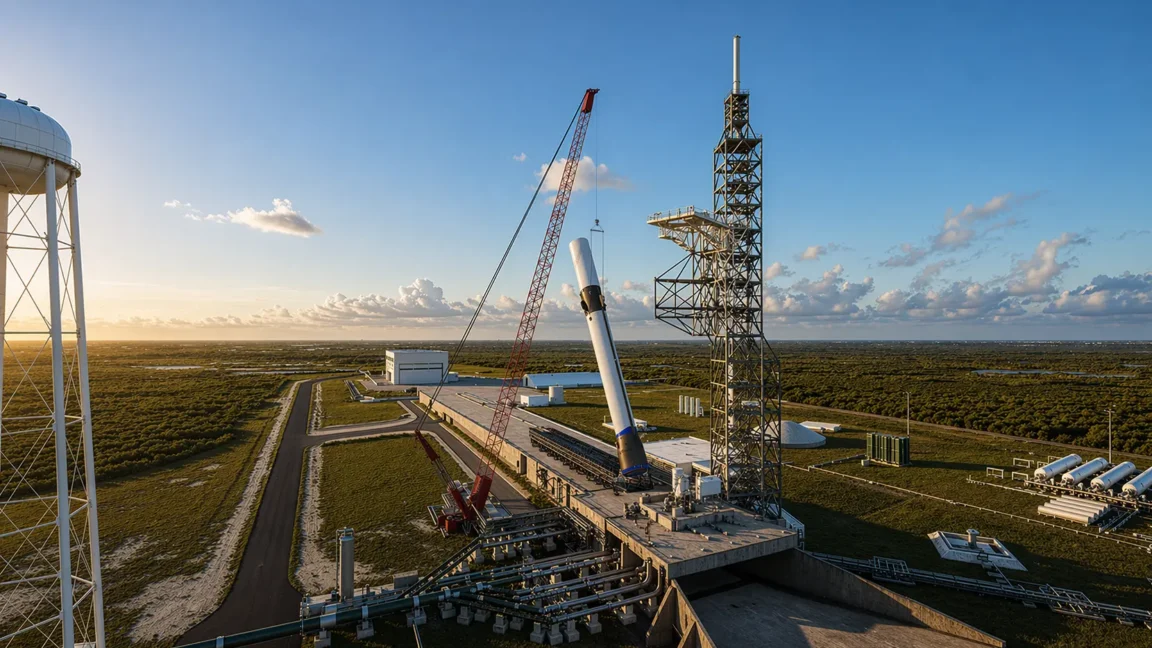
Blue Origin CEO Dave Limp provided additional details on the company's plans to return to flight. The company is actively investigating the cause of the anomaly, with early analysis pointing to the aft section of the first stage. During the test anomaly, Blue Origin lost the lightning tower and the massive transporter-erector. To expedite return, the company will not rebuild the old pad but instead use a crane to lift integrated stages onto the launch mount. Isaacman lauded Blue Origin for its transparency, noting broad interest in the topic within the space community.