Nepal floods death toll passes 580, nearly 2,500 missing including 56 Ukrainians
The confirmed death toll from Wednesday's sudden flooding on the China-Nepal border has reached 586, with almost 2,500 people still unaccounted for. Among the missing are 56 Ukrainian citizens, including two tour groups.
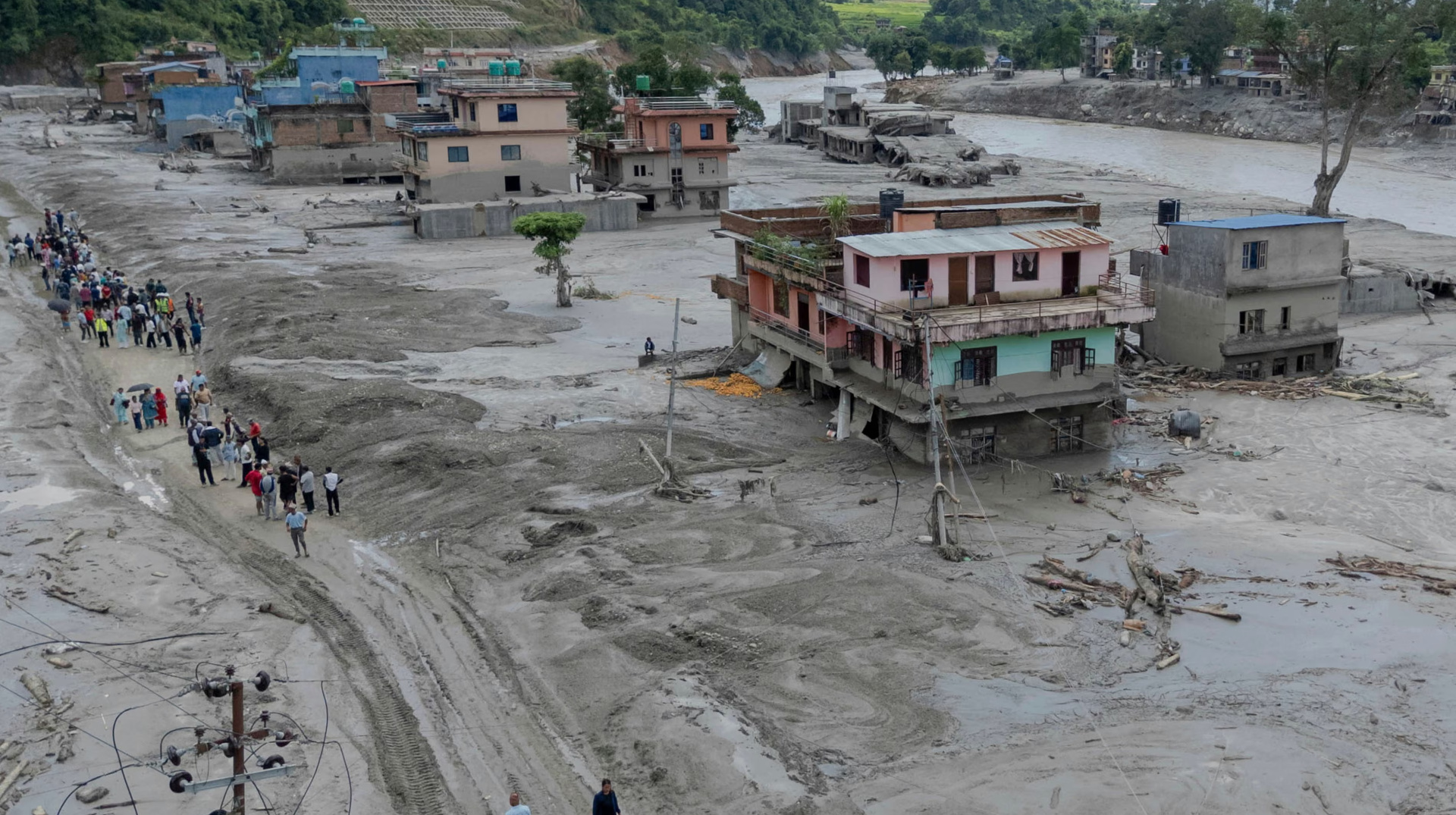
The toll from Wednesday's sudden flood on the China-Nepal border continues to climb, with The Guardian reporting 586 confirmed deaths and 2,478 people still listed as missing.
Nepal's disaster management authorities have confirmed 579 deaths and 1,924 missing within the country. China's state news agency Xinhua reported seven deaths and 554 missing in Tibet, while Indian authorities recovered seven bodies from rivers originating in Nepal, also counted among the disaster's victims.
At least 777 foreign nationals are among the missing — Nepal reports 517 unaccounted-for foreigners, while Chinese officials cite 260. Ukraine's Foreign Ministry confirmed Friday it still has no contact with 56 Ukrainian citizens — two tour groups of 48 and 7 people, plus one Ukrainian traveling with a foreign tour group. Search and rescue operations are ongoing. Dozens of Hindu pilgrims from various countries who were traveling to the sacred Mount Kailash in Tibet are also among the missing.
Rescuers have so far saved more than 3,700 people in Nepal, while Chinese authorities evacuated 555 tourists and 499 Chinese citizens from affected areas of Tibet. The Red Cross estimates at least 93,000 people have been affected overall.
On Friday, Nepal reversed an earlier decision and agreed to allow foreign rescue teams and experts into the country, following pressure from governments of nations whose citizens are missing. Foreign Minister Shishir Khanal said Nepal needs international help in specialized areas — including rescue operations in flooded tunnels and identifying and preserving bodies — but will not involve foreign specialists in general surface search operations. Nepal has also asked India and China to supply portable Bailey bridges to restore transport links in areas where roughly two dozen bridges were destroyed.
Authorities are monitoring two high-altitude lakes upstream from the disaster zone around the clock, warning that the risk of further flooding will persist until the water fully recedes. One of the lakes began overflowing its banks on Friday.
The disaster began on August 26, when a glacier collapse in the mountains on the Nepal-Tibet border triggered an ice-and-rock avalanche and a powerful debris flow, destroying villages, bridges and roads along the Bhote Koshi and Trishuli rivers.