OECD: Fraudsters can collect data on a person for months and use it years later
The latest OECD study on financial fraud in Latvia found that 74% of respondents have experienced an attempt. Criminals can reuse collected personal data later, so experts urge people to always report fraud.
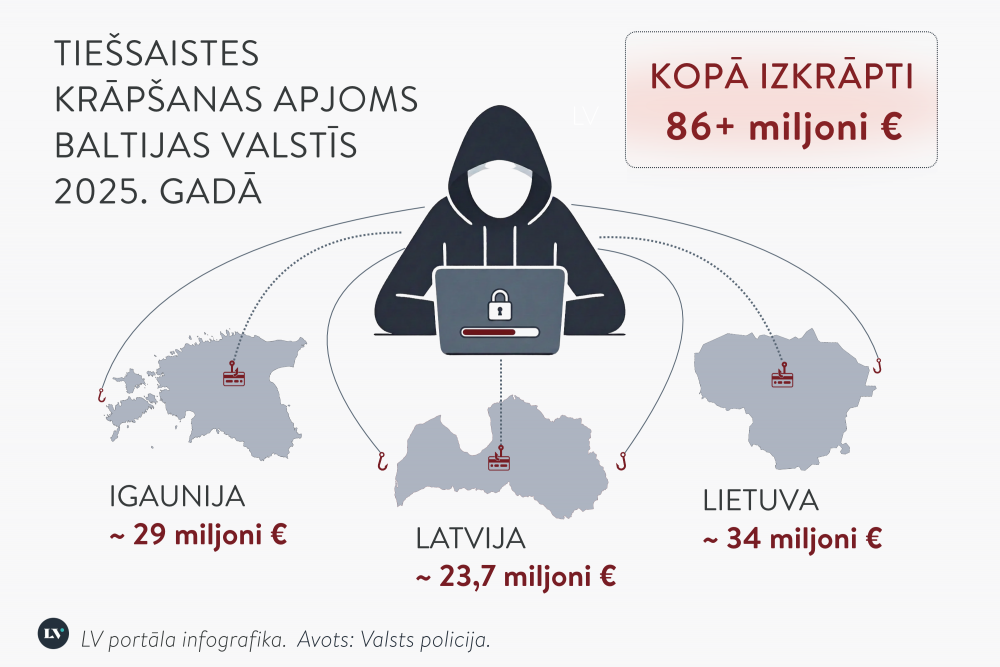
A study on financial fraud in Latvia by the Organisation for Economic Co-operation and Development (OECD), prepared with the Bank of Latvia and published on 20 November 2026, finds that fraudsters can gather information about a person over a long period and use it months or even years later. The findings matter because fraud affects almost all groups in society.
In 2025 the study surveyed 1,473 respondents aged 18 and over and interviewed 40 fraud victims. In the survey, 74% said they had experienced an attempted fraud, and 27% had become victims. Purchase scams, including online ones, were the most common.
Data collection and reuse
Solvita Sļadze of the State Police Cybercrime Combating Department explained that organised crime groups that previously dealt in drug smuggling or human trafficking are increasingly turning to online fraud. It brings higher profits and lowers the risk of being caught. Data can be obtained through a supposed lottery form or in conversations on dating sites, where a fraudster may keep up correspondence for six months or a year to gain trust. Groups also exchange or sell data among themselves.
Of all victims, 55% lost money; in the other cases, fraud mainly involved obtaining personal data.
Whom people trust
Artis Zeiļa, head of the Financial Literacy Division at the Bank of Latvia, said victims are united by circumstances rather than by age, education or digital skills. Fraudsters copy the logos and design of well-known brands and institutions, use lesser-known influencers in investment scams, and publish fraudulent ads on social networks.
Banks and reporting
Uldis Cērps, chairman of the board of the Finance Latvia Association, said the four largest banks now prevent more fraud cases than are carried out. Meanwhile, attempts rose from over 10,000 four years ago to over 20,000 in the first ten months of this year.
In the survey, 37% of those who experienced an attempt reported it neither to police nor to their bank. Experts stress that victims should stop communicating with fraudsters, inform their bank, report to the police and preserve evidence. Fraudulent websites can be reported to CERT.LV.


