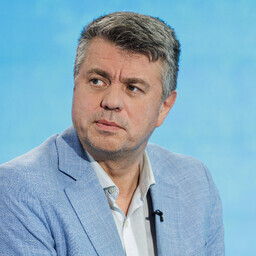
Ossinovski: Universal health insurance won't solve healthcare funding problems
Former Minister of Social Affairs Jevgeni Ossinovski said in an interview with Vikerraadio that universal health insurance is not a solution to healthcare funding problems, as aging population and rising costs demand more resources.

Former Minister of Social Affairs Jevgeni Ossinovski believes that while health insurance should be guaranteed to all permanent residents of Estonia, universal coverage will not solve the financial challenges of healthcare. In an interview with Vikerraadio, he noted that Estonia is an exception among European countries because roughly a tenth of the population lacks health insurance, which contradicts the logic of a solidarity-based system.
Ossinovski pointed out that lack of insurance does not mean people go untreated – in case of serious illness, they receive care through emergency services, but this is much more expensive for the state. In his view, introducing universal insurance would not significantly increase government spending.
The root of funding problems lies in demographic changes: an aging population and increasingly costly medical technologies drive up expenses. Ossinovski recalled that Estonia's solidarity system is based on three principles: the young pay for the old, the wealthy pay for the poor, and the healthy pay for the sick. Options for raising the social tax are limited, but one could discuss whether it is fair that some people work through their own companies and pay themselves no salary, thereby avoiding social tax.
If healthcare does not receive additional funding, out-of-pocket payments by citizens will rise, and more services will move to the private sector. Ossinovski warned that this would increase inequality, as wealthier individuals can afford paid services while lower-income people cannot. He stressed that society must understand that indecision also comes at a cost. He argued that the hospital network should be managed more uniformly and that all hospitals should be state-owned to allow more efficient resource planning.