A Soviet Physicist's 1960 Idea Behind This Year's Nobel Prize in Physics for Neutrino Astronomy
The 2026 Nobel Prize in Physics went to Belgian physicist Francis Halzen for his contribution to the IceCube neutrino observatory. The concept of such a detector in large natural bodies of water or ice was first put forward in 1960 by Soviet physicist Moisey Markov.
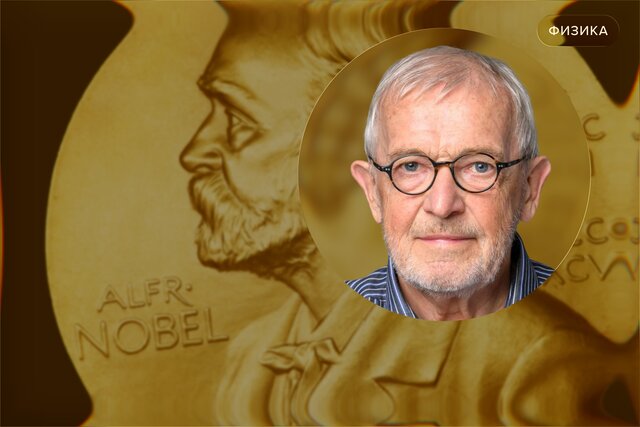
The Nobel Prize in Physics this year has been awarded to Belgian physicist Francis Halzen for his decisive contribution to the IceCube neutrino observatory and the discovery of high-energy neutrinos of astrophysical origin. The observatory is buried deep in the Antarctic ice.
Soviet roots
The idea of looking for neutrino traces in large natural bodies of water or ice, rather than only in laboratory detectors, was presented in 1960 at a conference in Rochester by Soviet physicist and Academy of Sciences member Moisey Markov. He delivered it in person, and many Western physicists, Halzen among them, immediately saw its promise. The USSR began building a similar neutrino telescope in the early 1980s. Its modern counterpart is Baikal-GVD in Lake Baikal, which works in water. It sits in the opposite hemisphere from IceCube, and combining data from both helps pinpoint the sources of particles. Detectors in water are also more precise, since light scatters less than in ice.
What a neutrino is
The neutrino began as a theoretical invention: Wolfgang Pauli proposed it to save the law of conservation of energy in radioactive decay. The particle takes part only in the weak interaction, so roughly 65 billion neutrinos pass through every square centimeter of the human body each second unnoticed. The reason is not that they are light, but that matter consists mostly of empty space.
How the detector works
The neutrino itself stays invisible. On very rare occasions it collides with a nucleus and produces an electron or a muon, which emits Cherenkov radiation in water or ice, similar to a shock wave. The same glow is seen in nuclear reactor water, and flashes of it are what IceCube and Baikal-GVD record. The main challenge is background noise from other sources, chiefly the Sun.
A new window on the cosmos
The greatest interest lies in neutrinos born outside the solar system or galaxy with extremely high energies. Nothing on Earth can produce such energies, but supernova remnants and quasar centers can. KM3NeT in the Mediterranean recently detected a neutrino of 120 petaelectronvolts. Neutrino astronomy has become the third observational window, alongside light and gravitational waves, and the Nobel Committee recognized its opening this year.

