Pakistani FM: New regional security architecture will also benefit Europe
Pakistan's Deputy Prime Minister and Foreign Minister Mohammad Ishaq Dar told Euronews that Middle East peace should now be built through a special mechanism whose effects reach beyond the Gulf. He also described Pakistan's role in mediating between the US and Iran.
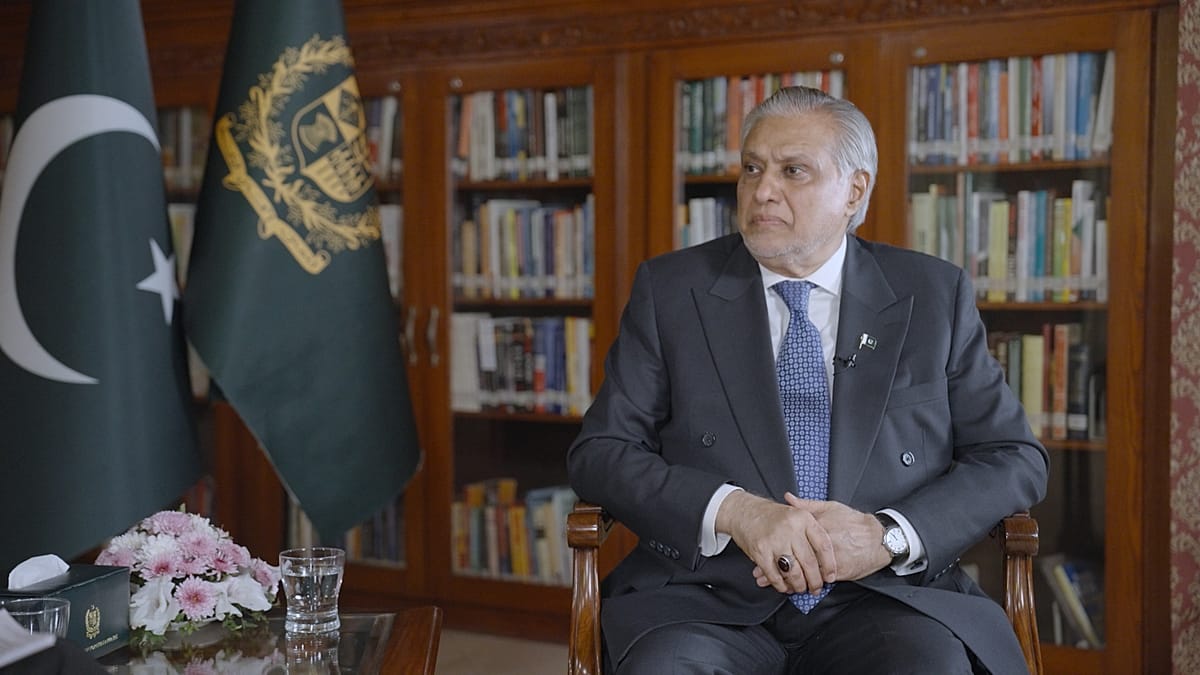
Pakistan's Deputy Prime Minister and Foreign Minister Mohammad Ishaq Dar has said regional peace in the Middle East should now be established through a special mechanism. Speaking in Islamabad to Euronews' World Conversation programme, in an interview published on 19 November 2026, he said the new security architecture and its consequences for the global economy must be considered beyond the Gulf region.
Mecca Pact as a possible starting point
Dar pointed to the mutual defence pact signed in August by Pakistan, Turkey and Saudi Arabia for their collective and individual security and defence. In his view, it could be the beginning of a regional security architecture, as it would help not only the region but also countries outside it. He said the UK, France and Germany are engaging with the new structure, while Italy is interested in joining the dialogue.
Mediation between the US and Iran
Dar said his government took the initiative in mediating between the US and Iran during the early phase of the war. On 28 February, the first day of the war, he called Iranian foreign minister Abbas Araghchi and urged him not to react to the US-Israeli attacks. He feared Iran might respond against Gulf countries, which, he said, unfortunately happened.
According to Dar, Pakistan's leadership worked to bring the parties to the table. He described a 21-hour marathon session with no real breaks, only consultative pauses. After the fifth round, he was confident that agreement would be reached by the sixth. This effort later led to the US-Iran Memorandum of Understanding to end the Iran war, signed on 18 June.
Strait of Hormuz
One of the core points of the agreement, which Dar said nearly every country supported, is that there should be no tolls, permits, fees or permissions in the Strait of Hormuz. He said the EU and the UK also backed the diplomatic process. Dar stressed that sea lanes must be free to pass and that Pakistan has not given up on this principle. He added that Pakistan continues to urge both parties to respect and honour what they signed on 18 June.