The GameCube that could also play DVDs now rarely sells for under $1,000
The Japan-only Panasonic Q combined a GameCube with a CD and DVD player, and its scarcity has turned it into a collector's item now fetching well over $1,000.
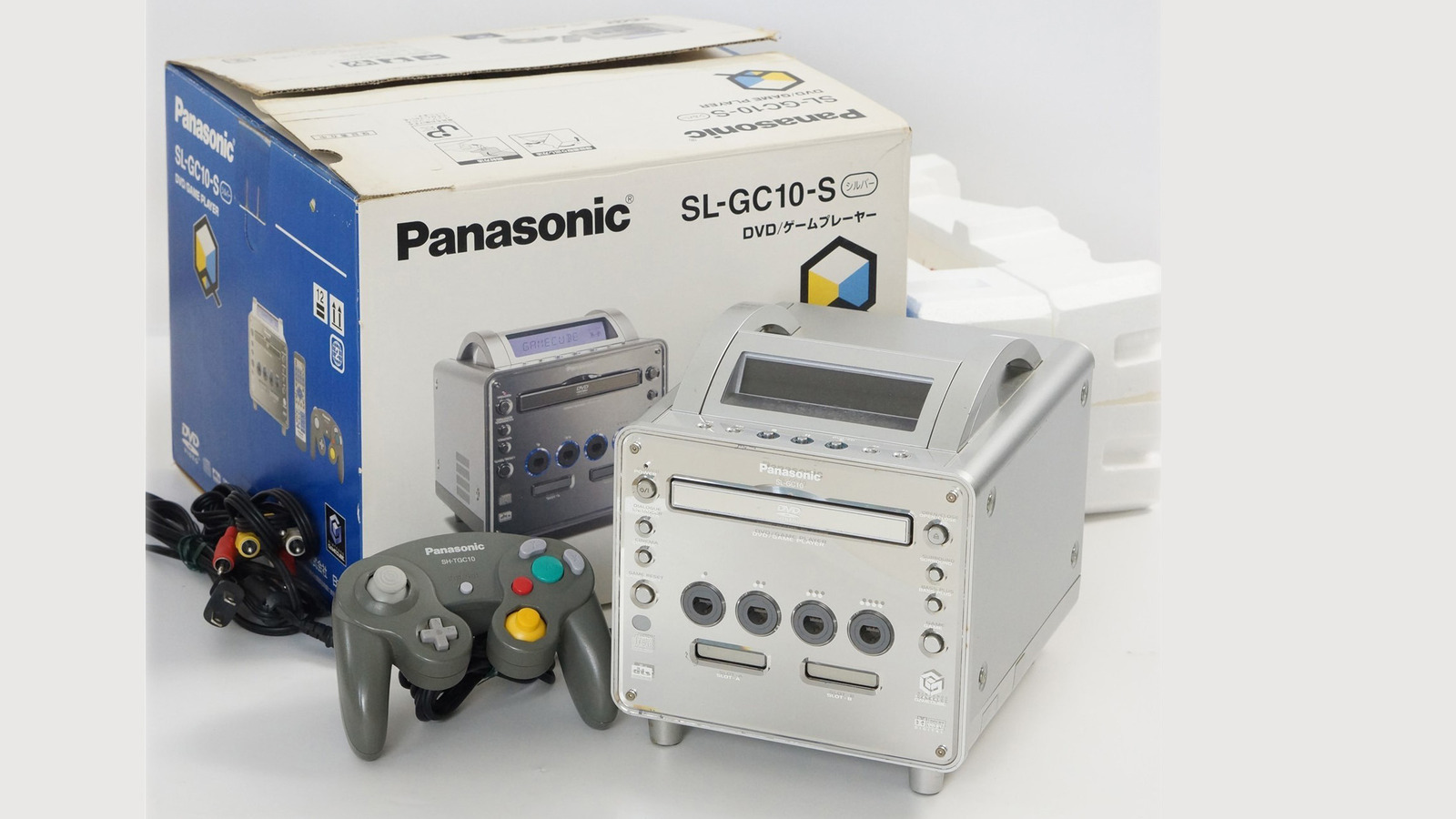
GameCube games retain unusually high value today partly because the console itself was never a big seller, especially compared to the PlayStation 2, which came with a built-in DVD player the GameCube lacked. That competitive gap gave rise to the Panasonic Q, a Japan-exclusive console released in December 2001, just three months after the GameCube launched in Japan.
Formally known as the Panasonic SL-GC 10, the device looked more like a home-theater component than a game console, featuring a reflective front panel, a backlit LCD display and blue-glowing ports. The partnership wasn't random: Panasonic's then-parent company, Matsushita, had helped design the miniDVD optical format used by the GameCube.
The Q's motorized disc tray accepted GameCube discs, DVDs and audio CDs. It included home-theater extras such as a Cinema picture mode, Dolby Digital and DTS surround sound, and additional audio-enhancement features. However, none of these benefits carried over to gaming — game audio stayed limited to the GameCube's standard analog output, and users had to manually flip a switch to toggle between game and DVD modes, effectively powering down one side of the system while the other restarted.
On the gaming side, the Q functioned identically to a standard GameCube, sharing the same controller ports, memory card slots and full library compatibility, though unmodified units were region-locked to Japan. Its unusual shape meant the standard Game Boy Player accessory didn't fit, forcing Panasonic to release a custom version.
Despite the engineering effort, the Panasonic Q failed to find commercial success, largely due to its steep price of ¥39,800 (about $313 at the time) — matching the PS2's launch price even though Sony's console had already built a dominant market position. The Q never officially launched outside Japan.
That scarcity has since turned it into a sought-after collectible. Loose units without original packaging typically sell for $1,200 to $1,300, while complete boxed models with paperwork can exceed $2,000.