Surprising Facts About the World's Oldest Structures: From Rice in the Great Wall to Mirror Pyramids
Sticky rice mortar in the Great Wall, eight sides of the Great Pyramid, and stones transported without wheels – these and other lesser-known facts are revealed in a new show about ancient wonders.
"National Geographic" has uncovered remarkable details about seven ancient structures that have survived to the present day. The Great Wall of China, stretching over 20,000 kilometers, was partly built using sticky rice mortar mixed with lime, creating an exceptionally strong binder. Contrary to popular belief, the wall is very difficult to see from space with the naked eye.
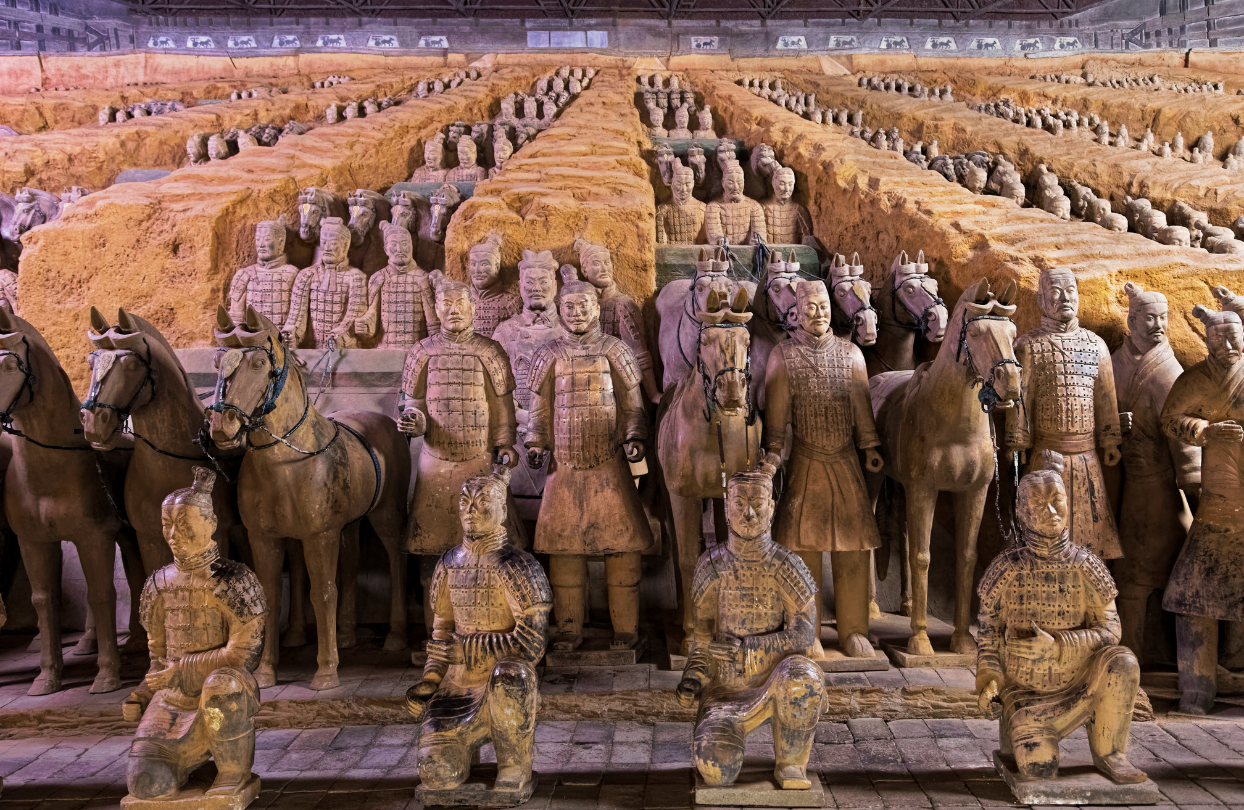
The Terracotta Army, created about 2,200 years ago, consists of 8,000 clay soldiers, 130 chariots with 520 horses, and 150 cavalry horses. No two figures are identical – they differ in facial features, hairstyles, and body postures. Originally painted in bright colors, the pigments faded soon after their discovery in 1974.
Petra in Jordan, over 2,000 years old, was not built from stone blocks but carved directly into rose sandstone cliffs. The city was rediscovered in 1812 by Swiss traveler Johann Ludwig Burckhardt, who disguised himself as a merchant. The Nabateans engineered a complex water collection system in the desert, and up to 90% of the city remains unexplored due to earthquake-induced landslides.
The Great Sphinx in Egypt, 73 meters long and 20 meters high, was almost completely buried in sand for centuries – only its head was visible. Full excavation took place in the 20th century.
The Great Pyramid of Giza, over 4,500 years old and the only surviving ancient wonder, actually has eight sides instead of four. It was originally covered in smooth white limestone that shone like a mirror in the sunlight, visible from miles away.
The Colosseum in ancient Rome, nearly 2,000 years old, featured efficient crowd control and a retractable awning operated by trained sailors. The arena may have been flooded for mock naval battles.
Stonehenge, over 5,000 years old, remains enigmatic – its purpose may have been religious, astronomical, or funerary. Some stones were transported from Wales, over 200 kilometers away, before the invention of the wheel. The monument is precisely aligned with the sunrise on the summer solstice.
These and other facts are featured in the new show "Secrets of Ancient Buildings."
/nginx/o/2026/10/04/17955905t1h17d1.png)
/nginx/o/2026/08/28/17881066t1h2a63.png)