Pauline Hanson blames 'fake news' media for controversies, but critics say she should own her words
One Nation leader Pauline Hanson has repeatedly blamed the media for negative coverage of her recent actions and comments, including associating with far-right convicted criminal Tommy Robinson and describing domestic violence as a 'two-way street'. Critics argue that as a potential opposition leader, she should take responsibility for her public statements.
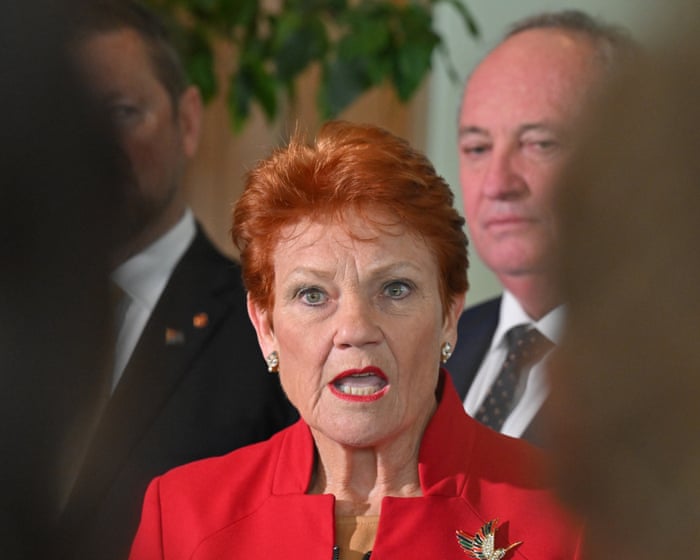
Pauline Hanson, the leader of Australia's One Nation party, has faced a series of damaging headlines in recent weeks. These include her decision to publicly associate with convicted far-right criminal Tommy Robinson and her description of domestic violence as a "two-way street". Rather than accepting responsibility, Hanson has attributed the negative press to a media conspiracy.
In a social media post, Hanson shared audio of the domestic violence exchange and accused the media of deliberately taking her comments out of context. She criticized "journalistic integrity", linking it to job cuts at Nine newspapers. Hanson stated that she is becoming less tolerant of mainstream media, echoing the tactics of Donald Trump by blaming journalists for the fallout of her own remarks.
This pattern is not new. Hanson has previously banned Guardian Australia and the ABC from her public appearances. Since her political emergence in 1996, One Nation has consistently blamed the media for reporting on its mistakes rather than reflecting on them internally. Hanson uses this strategy to position herself as an anti-establishment outsider.
However, according to current polling, Hanson could become the leader of the opposition after the next federal election. This role would subject her to the same level of scrutiny that the media applies to Labor and Liberal leaders.
The blame-shifting has been particularly evident during Hanson's recent European holiday. When Tommy Robinson asked about the end of the White Australia policy and immigration, Hanson called subsequent reports "fake news" fueled by left-wing media. She also claimed that Seven's Spotlight program pushed for her controversial interview with Robinson, though Seven sources said the podcast was One Nation's initiative.
Similarly, when criticism grew over Hanson's domestic violence comments, she posted a written excerpt and full audio, alleging media had used only a few quotes. Yet those quotes had already been published at length by outlets including the Guardian, ABC, Nine newspapers, and News.com.au. Her deputy Malcolm Roberts also accused the media of dishonest distortions when his past conspiracy theories resurfaced.
Throughout these incidents, One Nation has failed to provide specific rebuttals beyond complaining about tone. Experts, such as the Women's and Girls' Emergency Centre, have condemned Hanson's domestic violence rhetoric as "vile and shameful".
Hanson has expressed ambitions to become prime minister and to move One Nation into the mainstream. But with popularity comes responsibility, critics say, including owning the consequences of one's own words and actions.