Beijing's humanoid robot games showcase both record sprints and fiery falls
At the second World Humanoid Robot Games in Beijing, robots broke Usain Bolt's 100-meter record but others fell apart or caught fire, highlighting both progress and limits in robotics. Experts say true autonomy remains far off.
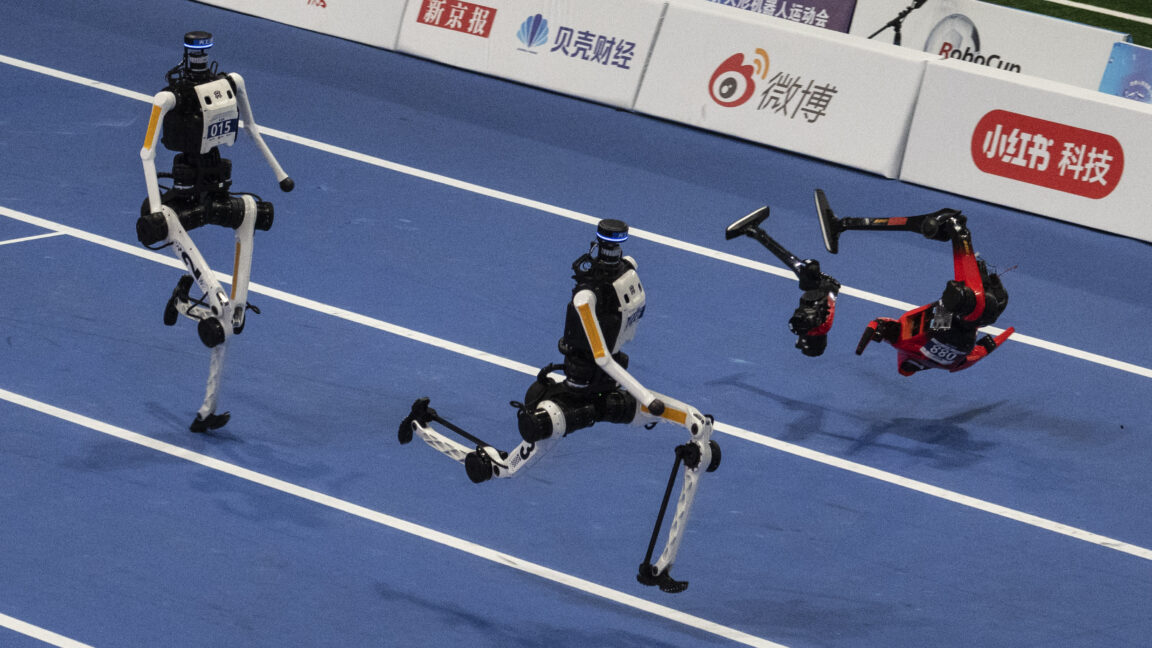
Beijing is hosting the second World Humanoid Robot Games from August 22 to 26, where humanoid robots compete in sprinting, kung fu, dancing, kickboxing, soccer, and table tennis. The event, organized with backing from Chinese state media and the Beijing city government, aims to highlight the commercial potential of the country's fast-growing robotics industry.
Viral clips show robots outrunning Usain Bolt's 100-meter world record, while others crashed into barriers, kept running past the finish line unable to stop, or even broke apart in showers of sparks and caught fire. Dipam Patel, a Purdue University PhD candidate, told Ars Technica that surpassing human records in sprinting and high jump reflects real advances in whole-body robotic control, but noted the robots are engineered for single, narrow tasks rather than general capability — as shown by sprinting robots that could only run in a straight line and couldn't slow down.
Practical trials
This year's games introduced more mundane benchmarks, including washing and folding laundry, tidying living rooms, and handling an unscheduled package delivery mid-task. At the Beijing Continental Grand Hotel, robots were timed on moving luggage, making beds, and restocking supplies, while a separate event tested robots sorting returned library books.
A notable outdoor challenge involved firefighting and rescue: robots had 30 minutes to identify hazardous substances, shut three valves, locate a fire, and extinguish it. Only three of 12 competing teams finished the full task. Other events tested dexterity, such as picking up beans and driving screws or nails.
Patel observed that many competing robots were still teleoperated by human controllers, even though the rules penalized scores for remote control. This points to the continued limits of robot autonomy — systems still struggle to generalize beyond trained scenarios and often depend on cloud computing rather than onboard processing to run their AI models.
Investment in humanoid robot companies exceeded $6 billion in 2025, with Chinese firms particularly aggressive in development and deployment. Meanwhile, the US government has banned imports of foreign-made robots, including China's most popular humanoid models, as US firms like Boston Dynamics and Agility Robotics push their own commercialization plans.