Study: No good solutions for insulating fieldstone walls from the inside
Research from the Estonian University of Life Sciences finds that insulating old fieldstone walls from the inside can preserve a historic facade but carries a long-term risk of moisture damage.
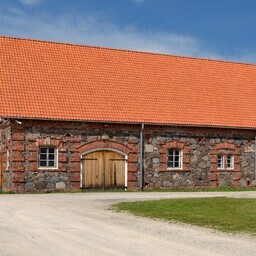
Insulating old fieldstone walls from the inside lets owners keep a building's historic facade, but it may lead to long-term moisture damage. That is the conclusion of research by Kadri Leiten, a lecturer at the Estonian University of Life Sciences, who recently earned her doctorate. She defended her dissertation on November 12.
Fieldstone walls are fairly common in Estonia, and the island of Ruhnu has a particularly large number of surviving buildings. They are mostly used as summer homes because the walls get too cold in winter. Anyone who wants to live in such a building year-round without covering the attractive facade may need to insulate the interior side of the walls.
How the research was done
Leiten used a wall of the stable at Mooste Manor as a case study. She tested insulation with reed or wood fiber boards, with clay plaster as a leveling layer. Short-term experiments suggested mold might not form right away between the masonry and the boards. Over a five- to seven-year period, however, the model showed moisture could still build up in the wall.
Interior insulation restricts the flow of heat from the room into the wall, so the masonry stays colder and cannot dry inward. Damp materials are more prone to cracking in freeze-thaw cycles. "Unfortunately, based on the results of my research, I cannot currently say that this is a particularly safe method of insulating walls from the inside," Leiten said.
The wall studied has been insulated for four or five years, and the coming years will show whether moisture builds up as predicted. The next step is to look for ways to limit it, such as water-repellent treatment used in Belgium, though the Belgian and Estonian climates are not comparable.
Climate and salts
The models came from the climate of the Vantaa region in Finland, which is expected to resemble northern Estonia's future climate. Projections indicate that temperatures will fall below freezing much less often by 2100, so buildings should be designed for more moisture and rainfall.
Old stone walls, especially in former agricultural buildings, can also accumulate salts. Leiten tested clay- and lime-based sacrificial plasters to draw them out. Nearly all removed salts, and clay plaster was generally easier to remove than lime plaster.
She advises caution, saying natural materials are not particularly well suited to interior insulation. Leaving the wall uninsulated is a safe option for now, provided it can dry both inward and outward and the room is ventilated.