Nearly half the world's farmers poisoned by pesticides each year, study finds
A new study estimates that around 46% of the world's farmers suffer acute pesticide poisoning every year, prompting calls for urgent action to phase out the most hazardous chemicals.
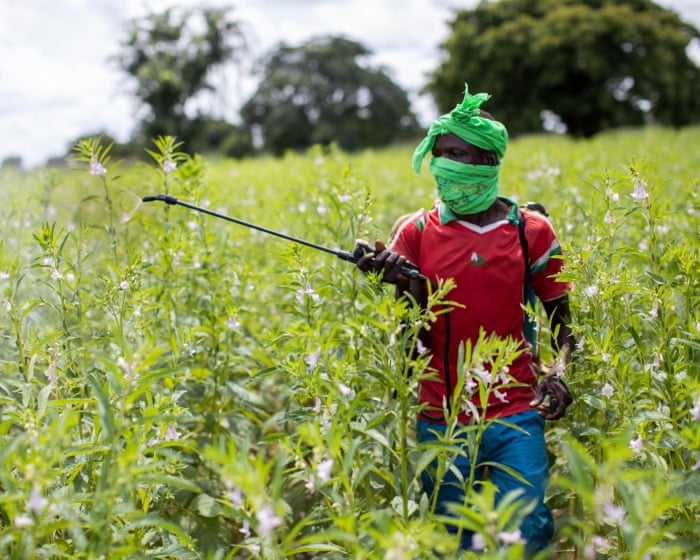
A new study commissioned by Pesticide Action Network estimates that between 402 and 433 million cases of unintentional acute pesticide poisoning occur among farmers and farm workers worldwide each year. Drawing on publicly available data from 2006 to 2023, researchers calculated that against a global farming population of roughly 934 million, this amounts to about 46% of farmers being poisoned annually.
The highest number of poisoning cases was estimated in southern Asia, followed by south-east Asia and east Africa. At the national level, Burkina Faso in west Africa recorded the highest incidence, with nearly 84% of farmers and farm workers reported to have experienced poisoning.
Deaths and calls for action
Published on Wednesday in the journal Frontiers in Public Health, the study also estimates that pesticide poisoning causes around 11,000 deaths every year, with nearly 60% of them occurring in India. Jayakumar Chelaton, executive director of Pesticide Action Network India, said the findings expose a crisis that can no longer be ignored.
The study's authors are calling for immediate action, including implementation of a UN recommendation to phase out highly hazardous pesticides. They note that pesticide use continues to rise globally, reaching 3.8m tonnes in 2023 — double the amount used in 1990.
Dr Sheila Willis of Pesticide Action Network UK said farmers must now be supported in accessing safer alternatives to protect their own health and that of their families.
The research did not assess the impact of pesticide exposure on an estimated 84 million children working in agriculture, nor did it examine long-term health effects. Other experts pointed to concerns over chronic exposure and growing evidence linking pesticides to Parkinson's disease, which several European countries already recognise as an occupational illness among farmers.