Study: Closeness of Views to Parties Was a Key Factor in Latvia's 15th Saeima Election
University of Latvia professor Jānis Ikstens presented a study on the 15th Saeima election on Friday. It shows that voters' choices were shaped largely by ideological closeness to parties, while party leaders also kept an important role.
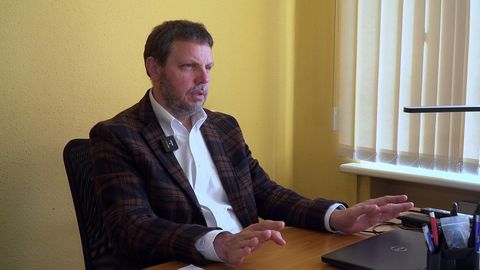
Voters' perceptions of how close their views were to those of a party were a significant factor in Latvia's 15th Saeima (parliament) election, although party leaders also retained an important role. University of Latvia professor Jānis Ikstens stressed this on 27 November while presenting the results of the research project "Saeima Elections in the Shadow of War". The study is a representative online panel survey of Latvian citizens aged 18 to 75: 1,700 people were surveyed in May and June, and 1,174 in October, after the election.
Closeness of views and leaders
Ikstens assessed how close voters were to parties in three areas: representation of the interests of Latvians and minorities, socioeconomic issues, and socially liberal versus conservative issues. Overall, this closeness explained party choice better than sociodemographic traits or media consumption. It mattered most for support of Progressives, while for New Unity it played a smaller role but still outweighed media consumption and sociodemographic traits.
The link between a positive rating of a leader and the choice of their party was strongest for Jūlija Stepaņenko of Sovereign Power/Alliance Young Latvians, followed by Ainārs Šlesers (Latvia First), Andris Šuvajevs (Progressives) and Andris Kulbergs (United List). When voters' views were also included in the analysis, the importance of leader ratings declined.
Attitudes to democracy and government
In October, 49.9% of respondents were still dissatisfied with how democracy works, although satisfaction had risen slightly. In October, 65.6% agreed that Latvia is governed incompetently and wastefully, compared with 73.1% in May and June. On the statement that a strong leader is useful even if he bypasses the law, 32.9% agreed and 34.5% disagreed.
United action to overcome security challenges was backed by 63.8%. Meanwhile, 18.5% agreed that in cases of serious threats criticism of politicians should stop, while 45.4% disagreed.
Sense of security and government priorities
Some 60.3% of respondents feel very or fairly safe in Latvia. In terms of personal concerns, economic development and social problems ranked above military threats. Respondents saw the greatest threat to Latvia coming from Russia, with the United States in second place.
Asked what the new government should prioritise, respondents most often named boosting economic development (36%), expanding access to healthcare (34.9%) and reducing the cost of living (32.8%). Raising the birth rate was chosen by 18%.