Rally at Riga's Freedom Monument backs activist Ieva Raubiško ahead of appeal hearing
A protest in Riga voiced support for human rights activist Ieva Raubiško. The Latgale Regional Court in Rēzekne begins hearing her criminal case on appeal on 25 November.
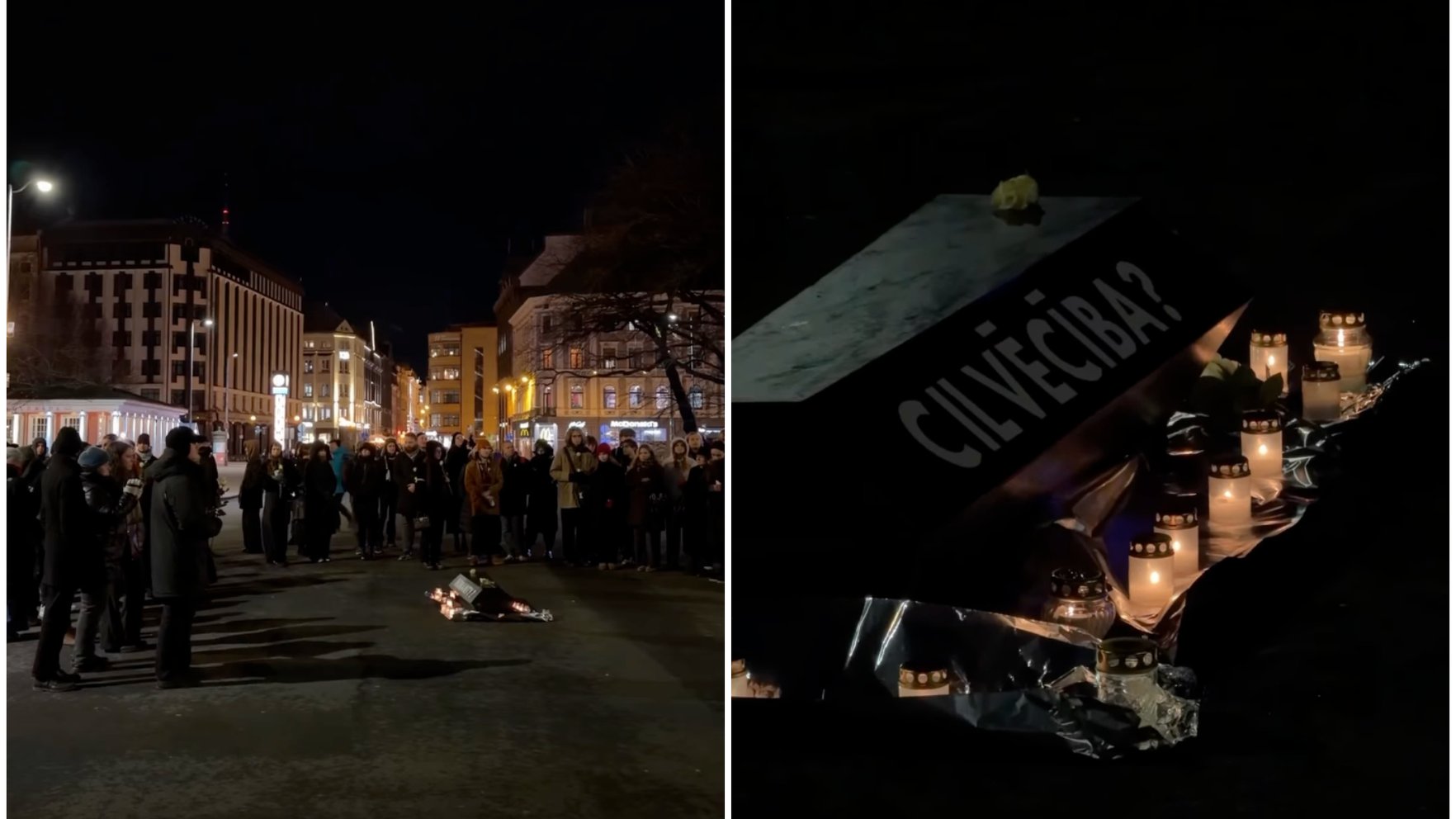
On Tuesday, 24 November, a protest called "Funeral of Humanity?" took place at the Freedom Monument in Riga, where participants expressed support for human rights activist Ieva Raubiško. The event was held a day before her criminal case goes to the appeal stage at the Latgale Regional Court in Rēzekne. The organisers wanted to draw attention to the case and argued that providing humanitarian aid should not be criminalised.
The rally
A symbolic sign reading "Humanity?" was set up at the site, surrounded by lit candles. Attendees took turns reading accounts by migrants about what they had experienced both in their home countries and at the Latvian border. The organisers consider Raubiško's prosecution for helping asylum seekers a worrying signal for society. Egils Grasmanis, co-founder of the movement "I Want to Help Refugees", said that criminalising humanitarian aid threatens society's humanity.
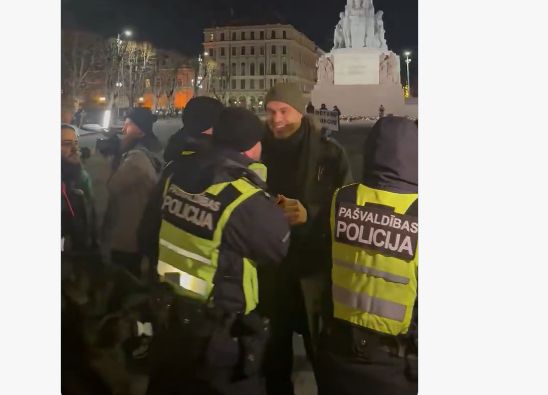
Opposing views were also heard. Aivis Ceriņš, a former candidate for the Saeima (Latvia's parliament), said that the sentence given to Raubiško is too lenient; municipal police escorted him away from the venue after his speech. Nearby, several people held a placard reminding of the possible prison sentence for illegally moving people across the Latvian border. According to the news agency LETA, they behaved calmly and consulted police about maintaining order.
Background of the case
The case relates to events in January 2023 on the Latvia–Belarus border, when several Syrian nationals seeking asylum in Latvia turned to Raubiško for help. She applied to the European Court of Human Rights (ECHR), which ordered interim measures, including an obligation to provide these people with food, water, medical care and temporary shelter. Raubiško then travelled to the border area together with Grasmanis.
Raubiško maintains that her aim was to save lives and secure compliance with the ECHR decision, and says that both the State Border Guard and the Emergency Medical Service were informed of the asylum seekers' whereabouts. Prosecutors, by contrast, argue that she instructed the Syrians to cross the border illegally in order to create grounds for the ECHR measures, and that she knowingly gave the court false information.
Earlier verdict
Last year, the court of first instance sentenced Raubiško to 200 hours of community service, finding her guilty of aiding illegal border crossing. She was originally charged with organising an illegal crossing, for which prosecutors sought a year and a half in prison. The court accepted that her actions stemmed from a wish to help rather than to gain materially, but concluded that the help was provided by unlawful means. Raubiško and her defence, as well as the prosecution, appealed the verdict.