Century-old German warship wrecks off Hiiumaa island pose hidden oil pollution risk
Three German torpedo boats that sank off Estonia's Hiiumaa island in 1916 still hold thousands of liters of heavy fuel oil. A new study says they are not leaking now, but corrosion makes safe removal harder over time.
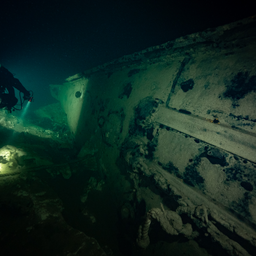
Three German torpedo boats that sank in 1916 off Hiiumaa, an island in Estonia's part of the Baltic Sea, still contain thousands of liters of heavy fuel oil. If released, the oil could pollute Baltic coastlines. This is the conclusion of a new study by researchers from the Estonian Maritime Museum (EMM) and Finland, led by Ivar Treffner, which assessed the wrecks and the environmental threat they pose.
How the ships were lost
The torpedo boats S57, V72 and V75 went down in November 1916 after straying into a minefield during a failed attack on the port of Paldiski. Navies of the time had only just begun switching from coal to liquid fuel, and the vessels sank carrying thousands of liters of heavy fuel oil. It remains trapped inside their hulls.
Current condition
The wrecks are not leaking at present, and the researchers do not expect the hulls to collapse in the near future. However, as the metal keeps corroding on the seabed, recovering the oil safely will become more difficult.
The Baltic Sea's cold, low-salinity and oxygen-poor water helps preserve the wrecks, while a scarcity of oil-degrading bacteria slows the breakdown of any fuel that escapes. The same conditions are currently keeping the potential pollution contained inside the hulls.
Researchers' warning
The scientists caution that the problem should be dealt with before the wrecks deteriorate further and the oil flows directly into coastal waters, which could cause a major environmental disaster in the Baltic. The findings were published in the journal Heritage.