'A great thrill': baby puffin is first one seen on Dorset coast in three decades
A puffling has been spotted on the Purbeck coast in Dorset, the first confirmed chick in 30 years, raising hopes for the struggling colony.
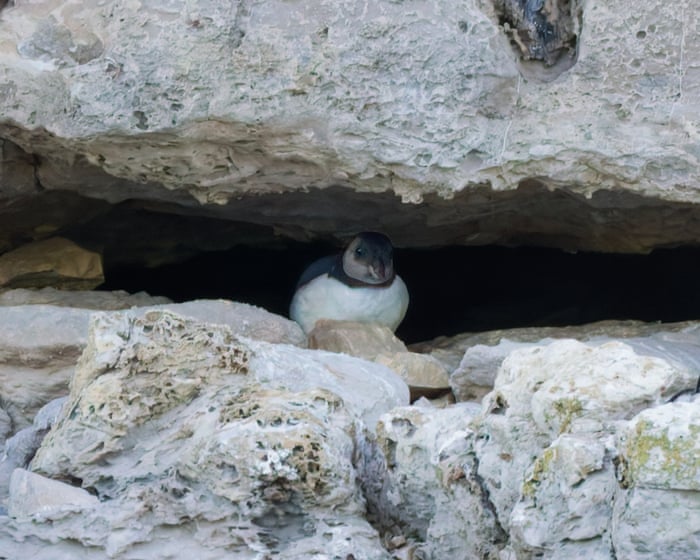
For the first time in 30 years, a baby puffin has been sighted on the coast of Dorset in southern England, marking a rare moment of hope for a colony that has been on the brink of local extinction.
The puffling, a young puffin chick, was spotted by volunteers monitoring the cliffs of the Purbeck coast near Swanage – the last known regular nesting site for puffins on the mainland of southern England. In the 1950s, about 80 birds nested there, but the number of pairs dropped to three, and no fledglings had been definitively seen in three decades.
Marine ornithologist Richard Caldow, who leads volunteers from the Purbeck Natural History Forum, described the sighting as "a great thrill." "Every chick matters," he said. "One puffling alone won't save this colony, but one is a whole lot better news than none."
Over the summer, 13 volunteers spent 15 weeks monitoring the precarious cliffs. In April, six adult puffins were recorded. Within weeks, volunteers observed puffins carrying fish to at least two nesting locations. Most deliveries stopped after 12 June, but fish drops continued to one spot, and eventually the puffling was spotted and photographed.
Caldow explained that they timed the photo perfectly. "We knew its parents had been feeding it from about 29 May to 5 July, so by then it was 38 days old. We chartered a boat on 7 July to anchor from 4 till 8 pm. It took three hours, but just after 7 pm it popped out behind its parent."
He believes the puffling may have left that night. "Where it is now we have no idea. The parents don't look after it once it fledges. It won't come back for at least two years and won't breed until 2030 at the soonest."
The National Trust has been investigating why the colony has failed to produce chicks. Theories include rats, peregrine falcons, and the climate emergency. Motion-sensor cameras have been installed by high-rope experts to capture activity inside nesting crevices.
Ben Cooke, rivers and coast project officer for the National Trust in Purbeck, said: "The images should hopefully reveal more of the nesting, feeding and fledging activity. Understanding what is happening inside the nesting crevice is the missing piece of the puzzle."