Polish Daily: Russia Planned Sabotage Near Kaliningrad Border to Blame Ukraine
The Polish newspaper Rzeczpospolita reports that Russian intelligence planned sabotage in Poland near the Königsberg (Kaliningrad) region border in order to blame Ukraine. Polish security services reinforced the border area after warnings from partner states.
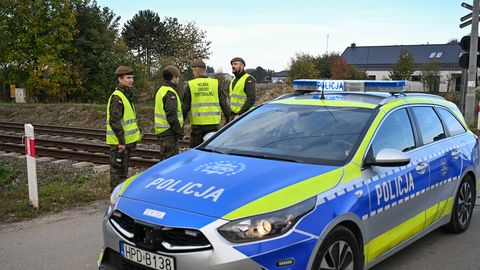
Russian intelligence services planned to carry out a sabotage operation on Polish territory in late October or early November, near the border with the Russian-controlled Königsberg (Kaliningrad) region, and to blame Ukraine for it. This is reported by the Polish daily Rzeczpospolita, citing high-level sources linked to Poland's military and security services. The report matters because it points to an attempt to undermine Western support for Ukraine through a provocation in a NATO member state.
The sources say Poland carried out an operation over the past two weeks to thwart the plot. Partner countries' intelligence services warned Warsaw about the threat, and Polish analysts had also spotted signs of danger. One source said there was information about specific sites meant to be attacked, and that the plan envisaged mass casualties.
A repeat of the Gleiwitz incident
The source compared the planned operation to the Gleiwitz incident, the attack on a German radio station on the German-Polish border on 31 August 1939, which served as a pretext for Germany's invasion of Poland. According to the source, those crossing the border would most likely have been shot, or evidence would have been found on them indicating they came from Ukraine. The aim, the source said, was to stop aid to Ukraine.
Polish services acted after Russian intelligence officers responsible for coordinating sabotage operations appeared on the Russian side of the border. Such operations are mainly planned and coordinated by Russia's military intelligence agency, the GRU. In late October, police forces in areas bordering Russia were reinforced with officers from other parts of Poland, border guard posts received additional personnel, and extra Internal Security Agency staff were sent to the area. Special units held exercises in the Warmian-Masurian Voivodeship.
In early November, a special operations headquarters was set up at the State Police's main headquarters for an operation in the Warmian-Masurian and Podlaskie voivodeships. Polish Prime Minister Donald Tusk said suspicious activity had been detected on the Polish-Russian border during the night of 3 November.
Poland's intelligence coordinator Tomasz Siemoniak did not confirm whether a terrorist attack had been planned at a place where many people could gather. He said such information is not disclosed, but that measures were taken because the threat was assessed as real, and that all steps taken were appropriate.