Political scientist: new government model sets quarterly and annual goals for ministers
Political scientist Lelde Metla-Rozentāle said on TV24 that under Latvia's new government working model, ministers will have concrete targets and must report on them every three months. She likened the approach to a classic organisation-head model.
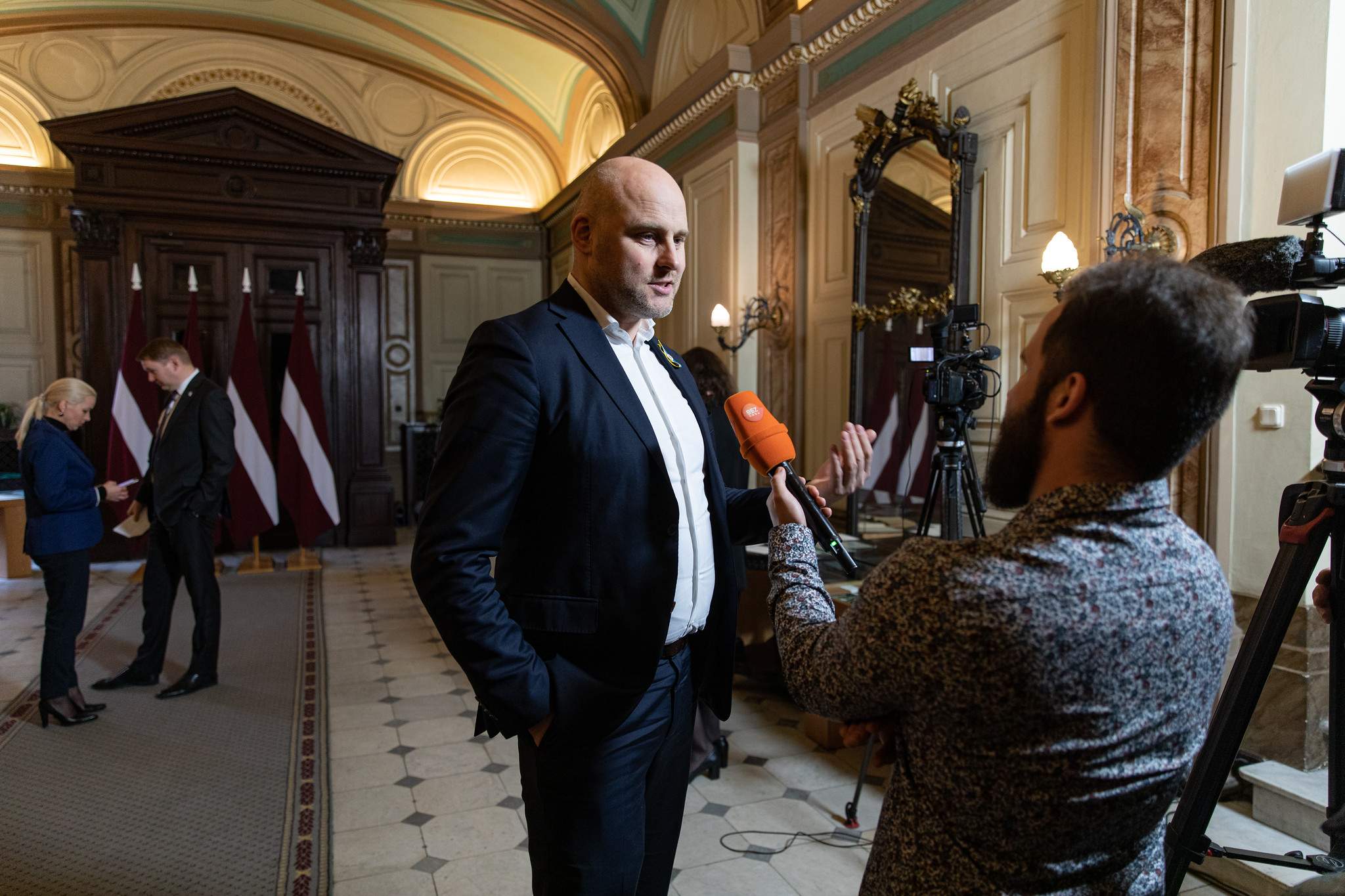
Under Latvia's new government working model, ministers will be given specific targets and will have to report on their progress every three months. After a year, it will be assessed whether each minister has completed their tasks and is suited to the post. The approach was explained on TV24's programme "Ziņu TOP" by Lelde Metla-Rozentāle, a political scientist and programme director at the Faculty of Social Sciences of Riga Stradiņš University.
Quarterly and annual goals
According to her, ministers will this time largely be held to professional accountability. Both the government declaration and the mission letters addressed to ministers will clearly define quarterly goals as well as an annual goal. The prime minister will check results every three months and review them after a year.
If targets are missed, it will be assessed whether there were objective reasons, such as external factors, or whether the minister was simply not strong enough in the role and should be removed.
A leader-centred approach
The programme's host pointed out that a minister is not merely an executor: as the top political leader of a sector, they must also take responsibility for its development vision.
The expert described the new governance model as distinctly leader-centred: the prime minister sets the goals, chooses the team and then evaluates its work. Ministers then consult their sector and work out how to carry out the task in the way best suited to it, while the prime minister measures results. Metla-Rozentāle called this a classic organisation-head model.
Asked whether the prime minister can have enough competence to set specific tasks for every sector, the political scientist said a professional team will be key. In her view, some ministers were chosen precisely as professionals because the prime minister is not afraid of strong team members. The prime minister knows what he wants to achieve, while the professionals will know how to deliver it, for example in finance or the economy.