Political scientist: Estonia's decision to close the Russian border is right but poorly justified
Estonian political scientist Karmo Tüür writes in a Postimees commentary that closing the eastern border is a forced move, but its justification is weak. He argues that closing the border and preventing sabotage should be treated as separate questions.
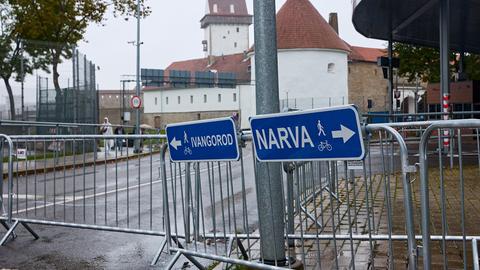
Estonian political scientist Karmo Tüür, in an opinion piece for the Estonian news outlet Postimees, assesses the decision to close the country's eastern border with Russia. He considers the step correct but poorly justified. He says he does not comment on Estonian domestic politics, but the border issue is part of foreign and security policy.
Passive defence
Tüür describes the decision as a forced move: the neighbouring state is aggressive, has attacked other neighbours before and is now sending drones and Molotov cocktails towards Estonia. If responding with similar methods is not seen as right, passive defence measures remain. These do not give absolute protection, which, in the author's view, does not exist at all.
Other arguments
The political scientist lists several further reasons. The long queue at the Narva border crossing created a false impression that Estonians urgently need to travel to Russia, although a large part of those waiting were foreigners using the route, for example on the way from Helsinki to St. Petersburg. According to him, this impression was exploited by those wanting to say something bad about Estonia. He adds that each crossing made citizens targets for special services, who could recruit them or put them on a watch list. The step is also an act of solidarity with countries that have already closed their borders and a lesson for those that have not.
Why the justification is weak
In Tüür's view, closing the eastern border does not explain how it helps against hired perpetrators, who can enter across the friendly southern border, from the north or west, or be recruited among Estonians themselves. Closing the border and preventing sabotage should therefore be treated separately. A further, separate question is the problems of people and companies for whom crossing the eastern border is vital.
The author urges readers to discuss the topic without naming politicians or parties, so that the view stays clearer and there is less conflict.