Progressive climate activist William Lawrence wins Michigan Democratic primary
William Lawrence, a Sunrise Movement co-founder who made opposition to AI datacenters a central campaign theme, won the Democratic primary in Michigan’s 7th congressional district. He will face Republican incumbent Tom Barrett in November.
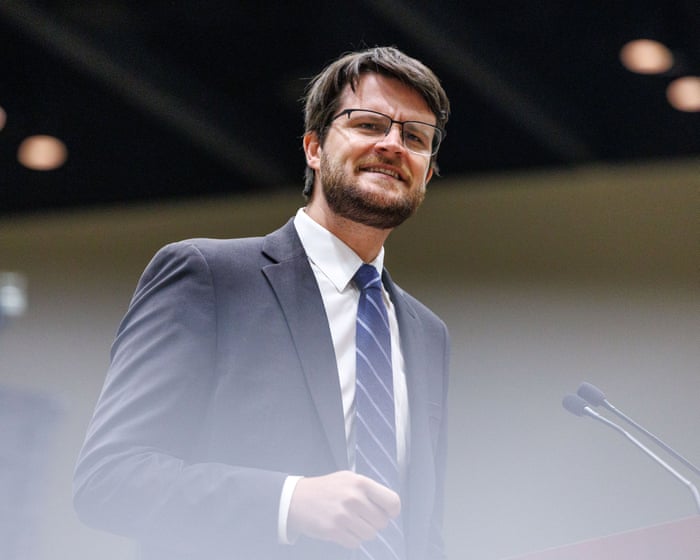
William Lawrence, a 36-year-old progressive organizer and co-founder of the youth-led climate group Sunrise Movement, has secured the Democratic nomination in Michigan’s 7th Congressional District. His victory over two better-known rivals marks a win for the party’s progressive wing and for a campaign built largely around curbing datacenter development.
Lawrence defeated Bridget Brink, former US ambassador to Ukraine and Slovakia, and Matt Maasdam, a former Navy SEAL and military aide to Barack Obama. He now turns to the general election, where he will challenge Republican Tom Barrett, the incumbent, in a district the Cook Political Report rates as one of the House’s 18 toss-ups. Barrett has frequently voted with former president Donald Trump.
During the primary, Lawrence earned endorsements from Senator Bernie Sanders, Representative Rashida Tlaib and progressive Senate candidate Abdul El-Sayed. His platform included universal healthcare, higher taxes on billionaires, ending US involvement in the Iran war and halting arms sales to Israel. But the issue that defined his campaign was his opposition to the unchecked expansion of artificial-intelligence datacenters, a topic he highlighted in his first television advertisement.
His campaign manager, Stevie O’Hanlon, said making datacenter opposition central to the race helped Lawrence win across the district, including in small towns where outside observers did not expect him to be competitive. In Mason, a town with a proposed datacenter, Lawrence took 49 percent of the vote in a three-way contest.
Lawrence has argued that datacenters place a “tremendous, unprecedented and unexpected burden” on the electricity grid and that there is no clean plan to manage the increased demand. Polling by Data for Progress found that 63 percent of US voters, including 66 percent of independents and 47 percent of Republicans, would be more likely to support a candidate who called for pausing datacenter construction.
In his election-night statement, Lawrence said voters in Michigan’s 7th district had sent a clear message that they were tired of Silicon Valley billionaires and Washington insiders deciding the future of their towns. He added that they wanted an “unbought representative” willing to stand up to leaders of both parties. He also acknowledged his opponent’s advantages, saying Barrett may have high-powered consultants and corporate CEOs on his side, but his own movement is made up of “real Michiganders” coming together across political differences.