Rally in Vilnius against riverbank development: activists say city losing green character
Around 150 demonstrators gathered outside Vilnius City Hall on Wednesday to protest a redevelopment project along the Neris River, warning it would remove hundreds of trees and damage a protected ecosystem. The municipality defended the plan as a revitalisation of a neglected area.
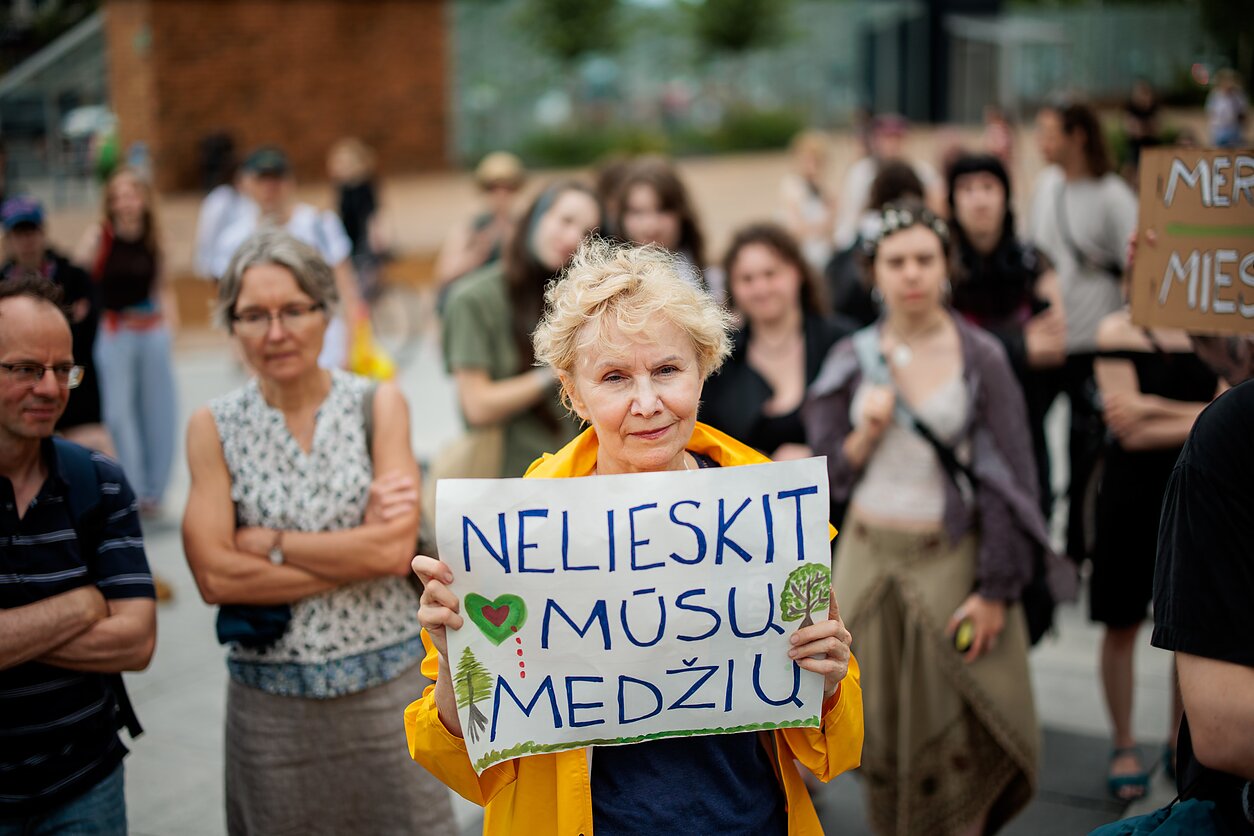
On Wednesday, about 150 people braved heavy rain to protest outside Vilnius City Hall against planned construction along the Neris River. The demonstration was organised by Fridays For Future Lithuania, Extinction Rebellion Lithuania, and the May 1 Trade Union (G1PS). The activists oppose the municipality's redevelopment plans for sites near Žirmūnų Street and Vingio Park, which include a rowing centre, garages, utility buildings, a parking lot, and riverbank reinforcement.
Protesters argued that the project would turn a recreational riverside area into a technical infrastructure zone. Viltė Zaveckaitė from Fridays For Future Lithuania said the municipality fails to understand the value of nature, noting the protest occurred during record heat across Europe.
According to the organisers, the project could lead to the removal of 327 mature trees. They also raised concerns about the impact on the Neris ecosystem, as the site borders a Natura 2000 protected area. The organisers called for a full environmental impact assessment, which Lithuania's Environmental Protection Agency has already requested. Specific worries include riverbed dredging, shoreline modifications, and installation of pontoons and boating infrastructure that could affect fish migration and spawning grounds. Removing trees and increasing paved surfaces and traffic could also raise pollution and reduce biodiversity, they said.
One protester, Mantautas, carried a wooden pallet with an attached axe and a packet of road salt as a symbol of his criticism of tree removal for construction and the city's winter salt use. He said trees near his home were cut down for a parking lot, and added: "The more trees die and the less green Vilnius becomes, the more we hear propaganda saying Vilnius is green. It isn’t green. It had the potential to be green, but now it is grey and brown." Vilnius was named European Green Capital for 2025.
Anthropologist and activist Jekaterina Lavrinec criticised what she called excessive urbanisation of nature, saying residents received too little information. She noted that young saplings often fail to survive and take decades to provide the benefits of mature trees, calling it "a vicious cycle of disposable trees."
The Vilnius municipality rejected claims that the project would destroy untouched nature. It said the rowing centre would be built on the site of former utility buildings in what it described as one of the most urbanised but neglected stretches of the riverbank. Local residents had repeatedly asked authorities to clean up the site, which has become a gathering place for homeless people, the municipality added. It stated that the current development footprint is smaller than a plan from over a decade ago, preserving some mature trees. The site currently has 557 trees, some invasive, and additional trees will be planted after construction. The municipality said: "Unfortunately, improving and revitalising this neglected site inevitably requires removing some existing vegetation. However, the construction of the Žirmūnai rowing centre also includes additional landscaping."
Technical design work is ongoing, along with an independent project review. Applications for a construction permit will be submitted after the review, and an environmental impact assessment has begun.