Cockroach Party protests: The youth movement India's Modi didn't see coming
India's Cockroach Janta Party (CJP), a youth-led movement born from anger over repeated exam paper leaks, has drawn tens of thousands to demand education reforms and the resignation of the education minister. Experts say the non-ideological protest questions the BJP's ability to govern effectively.
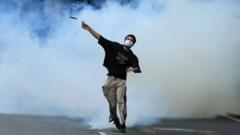
In India, tens of thousands of young people have taken to the streets under the banner of the Cockroach Janta Party (CJP), a movement sparked by repeated leaks of major public examination papers. On Monday, protesters attempted to march on parliament, prompting police to use tear gas and batons. Thousands continued demonstrating in the following days.
The movement centers on activist Sonam Wangchuk, who conducted a 26-day hunger strike losing 11 kg, ending it late Thursday. Student leaders vow to persist until their demands are met, including the resignation of Education Minister Dharmendra Pradhan and comprehensive education reform.
A different kind of protest
Analysts note that the CJP protests differ from earlier movements against Prime Minister Narendra Modi's government, which were often ideological or rooted in specific communities. This movement focuses on governance failures. "It questions whether the state can guarantee fairness in the examination system," said Yamini Aiyar, Senior Visiting Fellow at Brown University. Rahul Verma of the Centre for Policy Research added that the inability to conduct exams fairly is "a very different kind of political challenge to the BJP."
Many protesters are not typical opponents of the BJP; they are aspirational youth and their parents who see exams as a path to social mobility. Social media amplified their anger, helping organize large turnouts.
Government response
After initial silence, top BJP leaders responded on Wednesday. Defence Minister Rajnath Singh accused the opposition of using students as a political tool. On Thursday, Modi publicly addressed the issue for the first time, promising fast-track courts and strict punishment for those involved in paper leaks. Yet protesters argue these measures are insufficient.
Beyond exam leaks
Experts believe the movement taps into broader discontent with a slowing economy, scarce jobs, and diminishing opportunities. Aiyar noted that protesters are expressing "deep economic dissatisfaction and a lack of hope about the future." Some see it as exhaustion with a long-ruling government that has failed to deliver on its promises.
However, political scientist Suhas Palshikar warned that the movement might lose steam, like previous farmers' protests. "The young have shown their angst and disgust," he said, but its ideological character remains fluid. Whether it endures will depend on state repression, media coverage, and leadership.
/nginx/o/2026/10/02/17950121t1haa01.jpg)
