Artist Raivo Järvi's cheerful drawings masked a life marked by personal tragedy
The Tartu Art Museum is opening an exhibition on Estonian artist and children's TV personality Raivo Järvi. It reveals lesser-known aspects of his life, including personal loss and hardship.
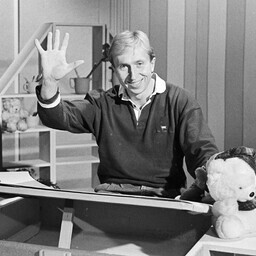
The Tartu Art Museum in Estonia opens an exhibition on Friday titled "Pildi ees ja pildi sees" ("In Front of the Picture and Inside the Picture"), devoted to graphic artist, illustrator and children's television presenter Raivo Järvi. It highlights lesser-known sides of his life and work: behind the cheerful drawings loved by children lay a life shaped by loss and hardship.
A disciplined artist
Järvi was born in Pärnu in 1954, the only child of a violinist and a ballet master. Family recollections say he decided to become an artist at about age five, after his mother warned him that an actor's life was difficult. He was known for discipline and precision. His son, Richard-Erik Järvi, says the same precision and stylistic purity can be seen in his graphic works.
Järvi came to television almost by accident in 1977, while studying at the Estonian State Art Institute (ERKI). When singer Voldemar Kuslap could not appear on the children's programme "Laulujütsid", Järvi volunteered to draw with the children live. Over the next two decades he appeared in programmes including "Laupäeval koos isaga", "Kõige suurem sõber" and "Jutupliiats". Exhibition curator Stella Mõttus says viewers often wondered whether the outlines were prepared in advance; in fact, he had simply practised them extensively.
Loss and financial struggles
Biography author Piret Kooli, who interviewed nearly 40 friends and colleagues, says his father died when Järvi was ten. Later he lost his first great love, dancer and actress Raili, who drowned during a film shoot in unclear circumstances. His son calls it the hardest period of his father's life.
His later relationships were also difficult. His relationship with Signe, the mother of Richard-Erik, was short-lived, and the boy was largely raised by his father, with great help from family friend Tiia-Liis Jürgenson. Järvi never achieved substantial financial success; a cat illustration on the redesigned packaging of a curd snack, introduced in 1996, did not secure him for life. Partly for financial reasons, he entered politics with the Reform Party and served two terms in the Riigikogu, Estonia's parliament.
He kept his cancer diagnosis largely private and kept working in parliament and on radio for as long as he was physically able.
The exhibition
Fourteen years after Järvi's death, the museum launched a public appeal for works for a retrospective. Nearly 500 pieces were identified in private collections and museums, and around 60 were selected. Some of his black-and-white graphic works are dark and even apocalyptic. His son believes they convey not only sadness and trauma but also resilience.