New play in Rakvere Castle invites audience to work out what happened for themselves
Performances of a new theatre production have begun at Rakvere Castle in Estonia, marking 800 years since the town was first mentioned. Based on John Pielmeier's play, it is set in a convent and leaves the audience to draw its own conclusions.
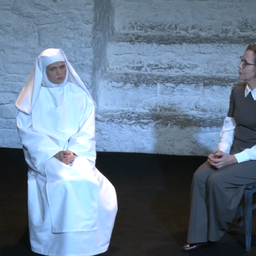
Performances of a new theatre production have started at Rakvere Castle in Estonia. The staging marks 800 years since the town was first mentioned in records, and the castle walls are an important part of the show.
The play by John Pielmeier is set in a convent. A young nun, Agnes, is accused of killing a newborn baby, but she insists she remembers nothing about the child or what happened. A court-appointed psychiatrist must establish the truth.
A drama with detective elements
Director Peeter Raudsepp stresses that it is not only a heavy psychological drama but also a detective story, in which viewers are invited to figure out events and reach their own conclusions. He told the Estonian public broadcaster's news programme Aktuaalne kaamera that the play raises many serious themes, including childhood trauma and the conflict between science and religion, yet there is also room for laughter. In his words, it matters that the audience can decide for itself how to understand it all and what really happened.
The lead role is played by actress Luise Lõhmus. According to her, Agnes above all wants love, but what she has been through makes her doubt herself and her own memories.
The castle as part of the staging
Lõhmus believes the story would come across very differently in an ordinary theatre auditorium. Had it been staged in the large hall of Rakvere Theatre, it would be a different production: the castle offers a very intimate space, so the story unfolds more closely, too. The thick walls lend the action a special solemnity, and the songs heard in the show seem made for such a place. In a large hall all of this would have to be imagined, she said, whereas here that is unnecessary.
The play, Agnes of God (original title Agnes Dei, "Lamb of God" in the source), is based on a real case that Pielmeier read about in a newspaper.