Religion row as Texas makes Bible stories required reading in schools
Texas education panel approved mandatory Bible stories for all five million public school students, sparking debate on church-state separation.
The Republican-controlled Texas State Board of Education voted 9-5 on Friday to approve a new required reading list that includes Bible stories for all five million public school students in the state. One Republican joined Democrats in opposing the measure. The requirements will not take effect until 2030 but have already sparked controversy.
The list includes classics such as Charles Dickens' "Great Expectations," William Shakespeare's "The Tragedy of Julius Caesar," Martin Luther King Jr.'s "I've Been to the Mountain Top" speech, and Margaret Thatcher's eulogy for President Ronald Reagan. However, it is the religious texts that have drawn fierce opposition: passages about Adam and Eve, the book of Exodus where God speaks to Moses through a burning bush, New Testament stories about Jesus, and the Parable of the Prodigal Son.
Supporters, including board member Brandon Hall, argue that students should learn about Judeo-Christian traditions essential to the nation's founding. "We are bringing the Bible back into schools this week for the first time in 60 years," Hall said.
Critics, such as Felicia Martin of the Texas Freedom Network, say the list "centers Christianity above all other religious faiths and traditions" and omits contributions of Black, Brown, Indigenous, and other groups. Education and civil liberties groups argue it infringes on religious freedom and lacks diversity.
Clare Haefner of the Texas Classroom Teachers Association expressed concerns about the length of the list and the potential loss of teacher autonomy. The association says even the reduced version remains cumbersome.
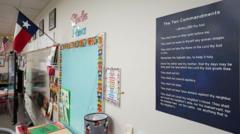
This is the latest conservative move to bolster Christian beliefs in Texas schools. Last year, Texas became the largest state to require classrooms to display the Ten Commandments, a law upheld by a federal appeals court in April. President Donald Trump on Friday took credit for spreading religious values, saying "religion is back in our country."