Rinkevics: Turning Point in War Against Ukraine Possible Next Year
Latvian President Edgars Rinkevics told Reuters that Russia's war against Ukraine could reach a turning point next year. He also voiced concern over a growing number of Russian hybrid attacks on European countries.

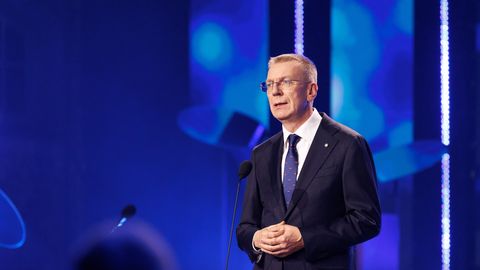
Latvian President Edgars Rinkevics said in an interview with the international news agency Reuters on Monday that Russia's war against Ukraine may reach a turning point next year that would lead to Moscow's defeat. Rinkevics is currently in the United States, where he is chairing the UN Security Council during Latvia's rotating presidency. He cited Russia's worsening economic situation and mounting international pressure as reasons.
Moscow not interested in peace
In Rinkevics's view, Moscow is not genuinely interested in ending the war and most likely uses ceasefire talks as cover to continue it. He said Ukraine faces a "perfect storm": a harsh winter, intensified attacks on energy infrastructure and increasingly intense strikes on civilian targets. Even so, Europe is ready to give Kyiv military and financial support, and Ukraine has repeatedly proven its resilience.
The president suggested the turning point could come next spring or summer. He noted that the number of countries applying pressure is growing, as is political consensus on the need to end the war.
Hybrid threats to Europe
Rinkevics expressed concern about Russian hybrid warfare against European countries, including airspace violations, cyberattacks and sabotage. In his assessment, Russia has so far tried not to cross the red line that would trigger NATO's Article 5, under which member states provide mutual assistance, but it is becoming increasingly brazen. At the same time, Russia's willingness to take risks is growing: since 2022 the number of sabotage cases, arsons and attacks on organisations friendly to Ukraine has risen sharply.
Recent hybrid incidents in Germany, Spain and the Baltic states made it hard to decide on a proportionate response, but European intelligence services are improving cooperation and coordination, in some cases preventing attacks. On Monday Latvia once again summoned the Russian ambassador over the recent attacks, and Rinkevics stressed the importance of such public condemnation. European countries respond to provocations with broader cooperation and intelligence sharing, while the struggle against the adversary is continuous, he said.