Rosneft Recruits Anti-Aircraft Gun Crews to Protect Samara Refinery From Drones
Russian state oil company Rosneft has advertised jobs for anti-aircraft gun and armored vehicle crews to defend its Samara refinery against Ukrainian drones, according to the exiled outlet Vyorstka.
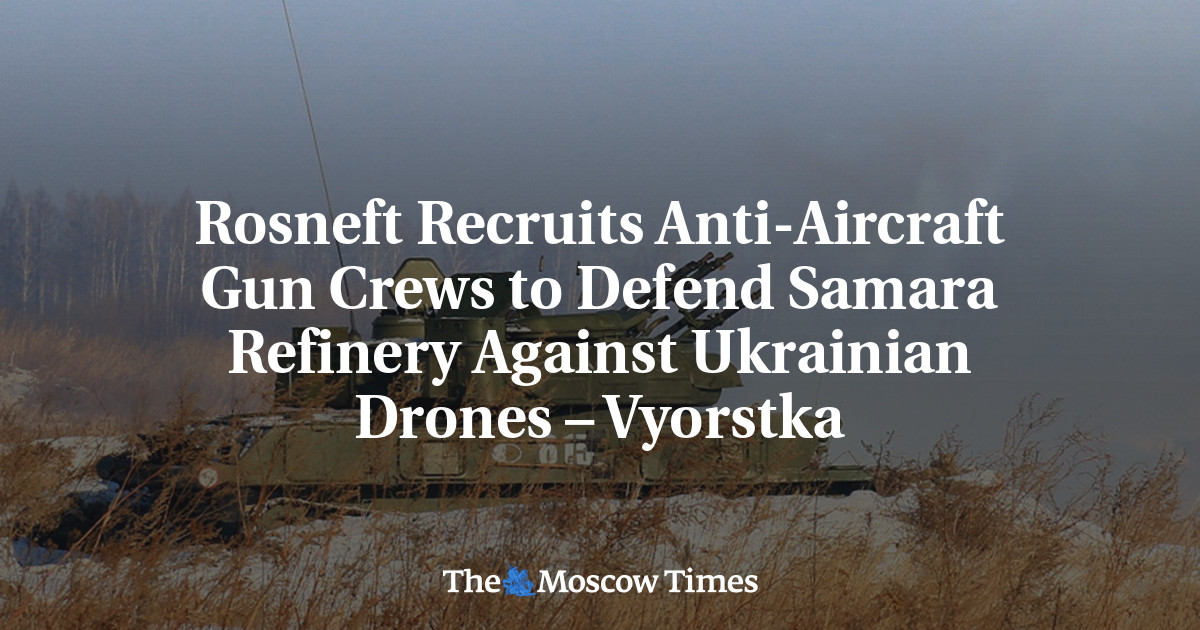
Rosneft, Russia's state-controlled oil company, has posted job listings for anti-aircraft gun and armored vehicle crews to protect a refinery in the southern city of Samara from Ukrainian drones. The exiled news outlet Vyorstka reported the story on Friday, October 9. The listings suggest that companies are organizing their own defenses against drones during Russia's war on Ukraine.
The ads appeared on HeadHunter, a Russian recruitment website. They sought staff to operate Soviet-era anti-aircraft guns and infantry fighting vehicles at the address of Rosneft's Kuibyshev refinery. Located on the Volga River, the plant has been attacked repeatedly since Russia launched its full-scale invasion of Ukraine in 2022.
Duties and pay
Applicants were to intercept aerial targets and keep armored vehicles stationed at the refinery combat-ready. The advertised pay totaled 249,000 rubles ($2,938) a month, including salary, bonuses from the regional governor and military reserve pay. Candidates were also offered hostel housing, three meals a day, and mandatory health and life insurance.
The listings were removed and archived soon after they went up, and HeadHunter indicated that the employer was no longer accepting applications, Vyorstka said.
Wider context
Russia's leading business lobby told President Vladimir Putin in May that hiring reservists to guard major companies was hard because they were regularly rotated to other sites. Russian businesses spent over 441 million rubles ($5.3 million) on anti-drone protection in the first half of 2026, more than six times the previous year's figure.
In August, Putin signed a decree allowing the state to place strategically important facilities under temporary administration if their operators are judged to have failed to protect them adequately from Ukrainian attacks or to repair damage quickly. It covers industrial, communications, transport and logistics facilities regarded as important for national security and economic stability. Putin later said the decree had "nothing to do with any plans for nationalization" of private property.