Ruginienė Resigns as Lithuanian Prime Minister
Lithuanian Prime Minister Inga Ruginienė has resigned, ending her Social Democrat-led government. She expressed pride in her tenure but noted the transition is part of a normal coalition reshuffle.
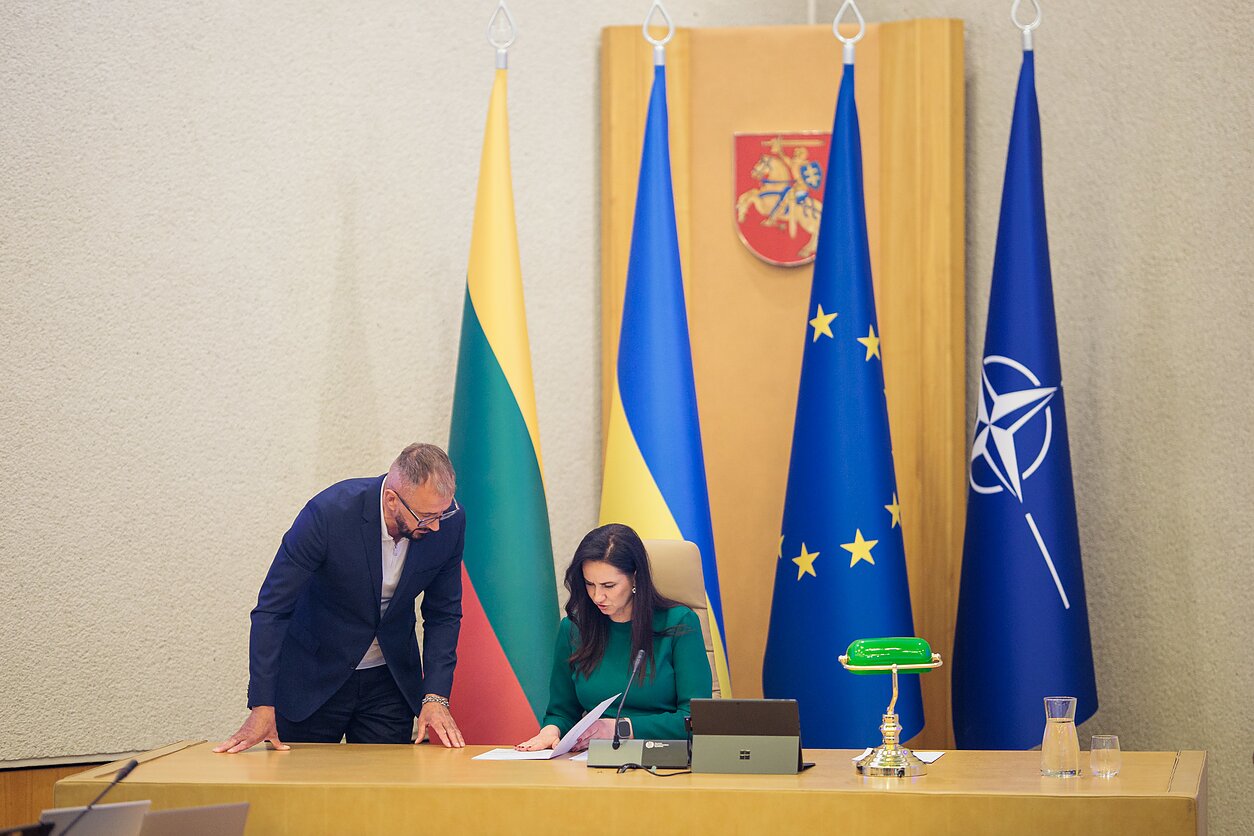
Inga Ruginienė has resigned as Lithuania's prime minister, bringing her Social Democratic-led government to an end amid a ruling coalition reshuffle. The outgoing cabinet held its final meeting on Tuesday, where ministers unanimously approved a resolution on their resignation. Ruginienė told her ministers that despite all difficulties, there was much to be proud of and each had made a significant contribution to the welfare of the state.
Speaking to reporters afterward, Ruginienė reflected with pride on her time in office. She stated that in politics one can learn many things—how to look good, how to speak fluently—but cannot learn courage or humanity. Empathy, the ability to listen to people, and the courage to act were the qualities that helped her not lose her way amid difficult choices and responsibilities. Ruginienė, who speaks with a slight accent, suggested that some people had been unsettled by the fact that she did not fit the established stereotypical image of what a prime minister should be—how they should speak, behave, or look. She said she never believed a leader should be built according to someone else's ready-made template.
Ruginienė pushed back against any suggestion that she was being sacrificed by her own party, calling the transition a normal political process. She revealed that Social Democratic leader Mindaugas Sinkevičius had in fact been due to become prime minister last year, when his predecessor Gintautas Paluckas resigned, but the move had been delayed. "What is happening now should have happened last year," she said. "I leave today with my head held high and a calm heart."
The resignation decree will be presented to President Gitanas Nausėda on Tuesday. He will ask the outgoing cabinet to continue in a caretaker capacity until a new government is formed. Under the coalition agreement, the president must submit a candidate for prime minister to parliament within 15 days. Social Democratic leader Mindaugas Sinkevičius is the designated nominee. Once approved by parliament, the incoming prime minister will have up to a further 15 days to present a cabinet and government programme for parliamentary endorsement.
The new ruling majority comprises the Social Democrats, the Union of Democrats "For Lithuania," and the Lithuanian Farmers, Greens and Christian Families Union, commanding 75 seats in the Seimas. At least four ministerial posts will change hands: the Democrats will take the agriculture, energy, and health portfolios, while the environment ministry will go to the Social Democrats. Ruginienė is expected to return to her former role as minister of social security and labour. Final cabinet lists are still being coordinated with the president.
This is the second time in the current parliamentary term that Lithuania has changed its government mid-term. The first was when Paluckas resigned last year, following investigations into his business dealings and ties, also triggering a full cabinet resignation.