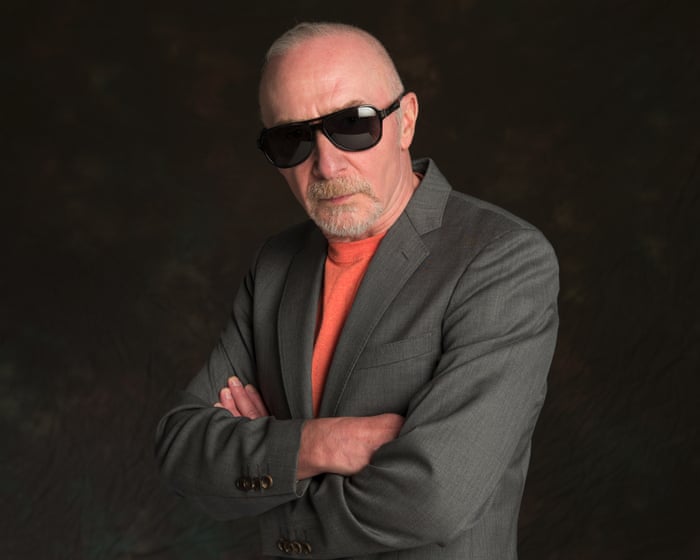
Rupert Murdoch 'very happy' Guy Pearce plays him in new Fleet Street film Ink
Actor Guy Pearce said at the Venice film festival that Rupert Murdoch is pleased with his portrayal in Danny Boyle's film Ink, about the origins of the Sun tabloid, though Murdoch had not yet seen it.
At the Venice film festival ahead of the premiere of Danny Boyle's new film Ink, actor Guy Pearce said media mogul Rupert Murdoch is 'very happy' about being portrayed by him on screen. Pearce, who has been in contact with Murdoch's daughter Elisabeth, relayed her message that 'Dad's very happy that you're playing him' — though he noted Murdoch had not yet seen the finished film.
Boyle, known for directing 28 Days Later, made the film from a script by playwright James Graham. Ink is set in 1969, the year Murdoch took control of the struggling Sun newspaper and brought in Larry Lamb (played by Jack O'Connell) with the goal of outselling the then-dominant Daily Mirror.
Graham revealed that Murdoch attended the stage adaptation of the story twice, both in the West End and on Broadway. He said Murdoch was typically guarded about his reactions, but appeared genuinely moved by a sequence depicting the gritty, steam-filled process of old-style newspaper printing. Graham found this notable given that the story ultimately shows Murdoch as the man who pushed the industry toward digital, a shift that transformed Fleet Street forever.
Unlike HBO's Succession, widely seen as inspired by the Murdoch family's US business dealings and internal rifts despite denials from its creators, Boyle's film focuses exclusively on Murdoch's early years in Britain. The director said Murdoch had represented a 'breath of fresh air' in a rigid British society at the time, and had faced prejudice for being Australian — something Boyle said he personally related to.
Graham added that he wanted the script to trace how the Sun's disruption of the newspaper industry has echoed into contemporary media, arguing that the pursuit of engagement and entertainment born from that era is now even more deeply embedded in today's discourse through social media and artificial intelligence.
/nginx/o/2026/06/06/17694271t1h2a4b.jpg)