Saudi Arabia faces dilemma as it tries to avoid US-Iran war
Saudi Arabia is in a bind as it seeks to avoid direct involvement in the US-Iran conflict, but after repeated attacks from three fronts, it has conducted joint strikes with the US against Iranian-backed militias in Iraq.

Since the US and Israel launched their war on Iran on 28 February, Saudi Arabia has mostly tried to stay out. But after being attacked from three sides, the kingdom changed course this week by conducting joint strikes with the US on Iraqi paramilitary groups, which Riyadh believes have been using drones to attack Saudi Arabia.
The dilemma now is whether to continue hitting back as a deterrent or to try to de-escalate, perhaps by paying off adversaries.
The conflict has two clear sides. On one side are Iran and its Islamic Revolutionary Guards Corps (IRGC), along with allies: the Houthis in Yemen (who took over much of the country in 2014), Iraq's Popular Mobilisation Forces (allegedly responsible for 30 drone strikes on Saudi Arabia), and Hezbollah in Lebanon, currently lying low. On the other side are the US with its powerful Central Command (Centcom), Gulf Arab states, and Jordan. Israel remains a close US ally but is not an active participant.
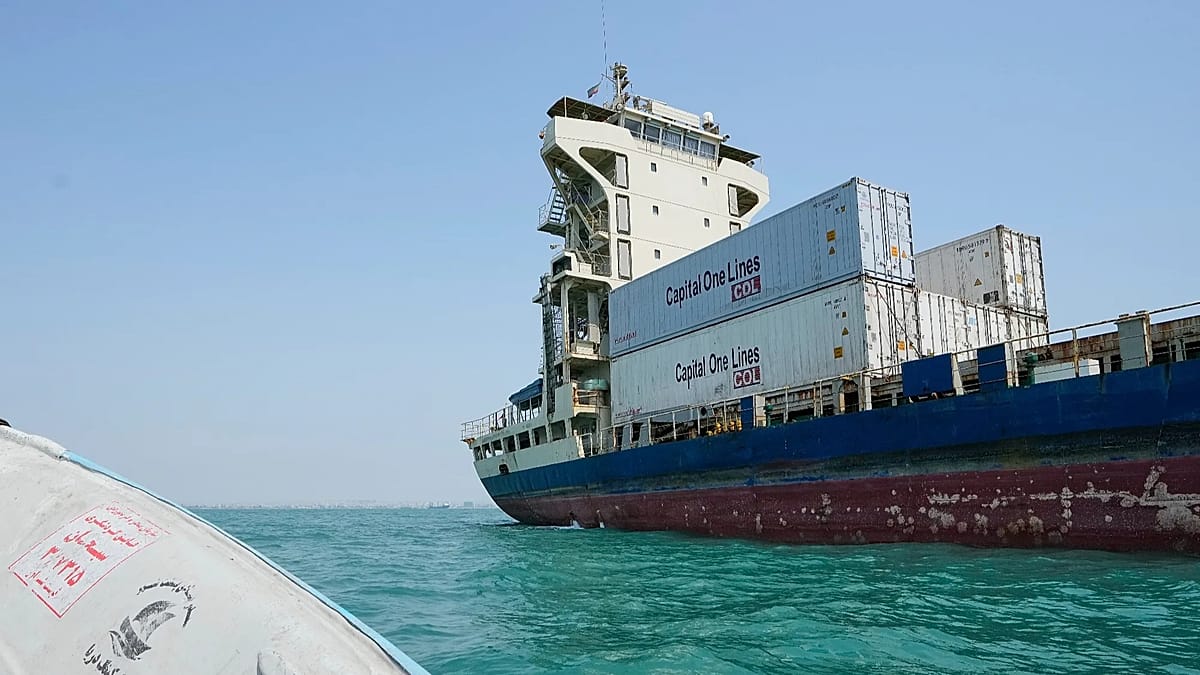
Iran has recently focused drone and missile attacks on Jordan, Kuwait, and Bahrain, and has targeted commercial shipping trying to pass through the Strait of Hormuz. The involvement of Iraqi militias and Houthis is a new phenomenon, showing the risk of a widening conflict without a lasting US-Iran peace deal.
Saudi Arabia has several reasons to avoid full-scale war. Its de facto ruler, Crown Prince Mohammed Bin Salman, is pursuing Vision 2030 to diversify the economy away from oil, attract foreign investment, and build vulnerable data centres. This would be undermined by persistent threats from Houthi drones or Iranian missiles.
In September 2019, Saudi Arabia suffered a shock when Iranian-backed Iraqi militias attacked its Abqaiq and Khurais oil facilities, knocking half of its oil exports offline for days. Satellite images this Monday showed fresh drone strikes on Abqaiq.
Oil remains the kingdom's economic lifeblood. Iran retaliated against US-Israeli attacks by effectively closing the Strait of Hormuz. Saudi Arabia responded by pumping oil via its east-west pipeline to Yanbu on the Red Sea, from where it was shipped to Asia. But on 13 July, Saudi forces bombed Sanaa airport, ostensibly to prevent an Iranian plane from landing. In retaliation, the Houthis attacked Abha and Jizan airports and began targeting Saudi shipping in the Red Sea, threatening oil exports through the Bab El Mandeb strait.
Saudi Arabia spent seven years trying to bomb the Houthis into submission and failed, causing one of the worst humanitarian disasters of our time. An uneasy truce in 2022 has now broken down, with the kingdom facing threats from both the south (Houthis) and the north (Iraqi militias). None of this was anticipated in Vision 2030.