Seimas speaker: Vilnius must find compromise on language services for Ukrainians, Belarusians
Lithuania's Seimas Speaker Juozas Olekas says Vilnius municipality should find a compromise allowing Ukrainians and Belarusians to communicate with city authorities in their own languages, after the capital stopped accepting written requests in Russian.
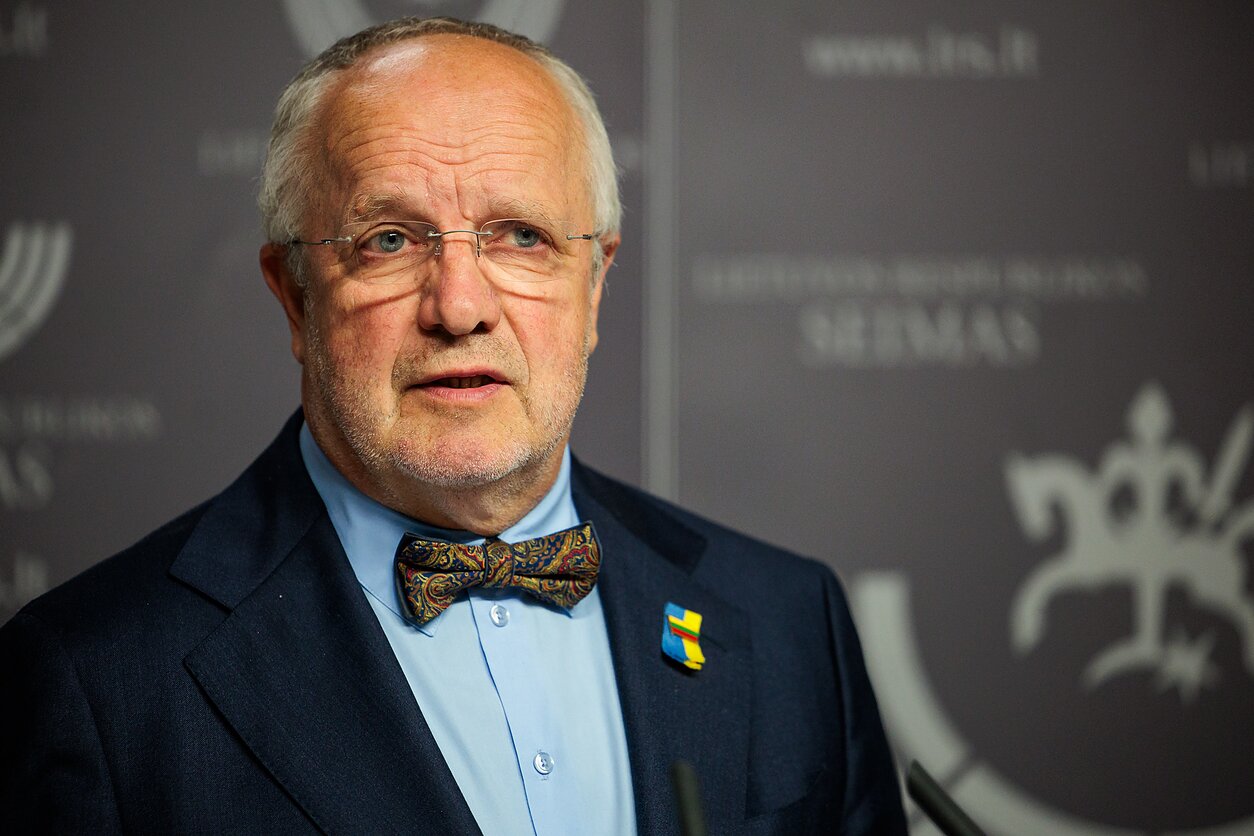
Lithuanian Seimas Speaker Juozas Olekas said on Wednesday that Vilnius municipality needs to find a compromise allowing Ukrainians and Belarusians to communicate with city authorities in their native languages. His comments followed the Vilnius municipality's decision to stop accepting written applications and complaints in Russian.
Speaking to radio station Žinių Radijas, Olekas said that official communication should generally be conducted in the state language, but noted that other nations' languages have become more common in Vilnius. He said he was mainly referring to Ukrainians and Belarusians, who should not be forced to use Russian when dealing with authorities.
According to Olekas, a compromise should be found for people arriving in Lithuania, allowing them to be received as guests in their own language. At the same time, he said those planning to settle in Lithuania long-term should be encouraged to learn Lithuanian. Olekas also stressed that Lithuania needs to improve access to Lithuanian-language education for foreigners, particularly those fleeing war or authoritarian rule.
Municipal decision
The Vilnius municipality announced last week that it would no longer accept written applications and complaints submitted in Russian. Oral information in Russian and other non-EU languages will only be provided when a municipal employee is proficient in that language. Russian has also been removed from the municipality's website and its queue management system.
At the same time, the municipality said it is expanding opportunities for foreign residents to learn Lithuanian. More than 1,000 people are expected to take part in free, remote courses this year, with an additional 300,000 euros allocated to the program.