Ancient proteins confirm gender-specific grave goods in Estonian child burials
Doctoral research at the University of Tartu shows that grave goods of Estonian children around age 10 in the late Iron Age and early Medieval period were more complex and gender-differentiated than those of infants. Ancient proteins from tooth enamel now allow biological sex to be determined.
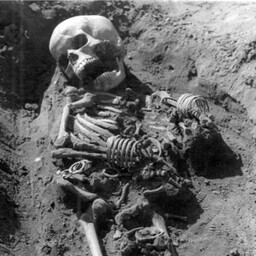
Grave goods placed with late Iron Age and early Medieval Estonian boys and girls around the age of 10 were more complex and more differentiated by gender than those of infants, according to doctoral research at the University of Tartu. Until now, the sex of buried children in archaeology has been inferred only from objects found in graves, but ancient proteins reflecting biological sex can now provide more definitive answers.
Testing old assumptions
Karin Rannaäär, a junior researcher in archaeology at the University of Tartu, is testing hypotheses from a 2012 bachelor's thesis by Keiti Randoja. That work analyzed child burials at the Pada and Kukruse archaeological sites in Lääne-Viru County using artifact typologies alone. Rannaäär extracts ancient proteins from dental enamel to identify XX or XY chromosomes, establishing biological sex, and then checks whether the traditional assumptions based on artifacts held true. The method is known as paleoproteomics.
The usual assumption has been that boys were buried with more weapons and tools, and girls with more jewelry. Rannaäär says her initial results suggest that around age 10 is a turning point when the quantity and complexity of grave goods change.
What the graves contained
Items in the graves of smaller children are relatively simple and similar for both sexes: mainly jewelry and clothing-related items, such as bronze studs and spirals, along with necklaces, bracelets and beads. For older children the goods grow more diverse. In girls' graves the amount of jewelry rose sharply from about age 10, until the graves came to resemble those of adult women. At around the same age, boys were buried with tools and spearheads, as men were.
Rannaäär offers two possible explanations: boys may already have been practicing combat with weapons, since a warrior's life awaited them, or a spearhead was placed in the grave in the belief that the boy could have become a warrior had he lived.
Pada had 171 excavated graves and Kukruse 46; both sites date mainly to the late 12th and early 13th centuries. In both cemeteries children were buried alongside adults, with no separate customs or dedicated areas. According to Rannaäär, this shows that children were seen essentially as little adults. The thesis was supported by the European Commission-funded Food ID project.