Student List Leads Serbian Parliamentary Vote, Promises Tough Fight Against Corruption
In Serbia's early parliamentary election, the Student List, which grew out of student-led protests, won 52.7% of the vote with 97% of polling stations counted. The party SNS took 39.2%. The Student List has pledged a tough fight against corruption.

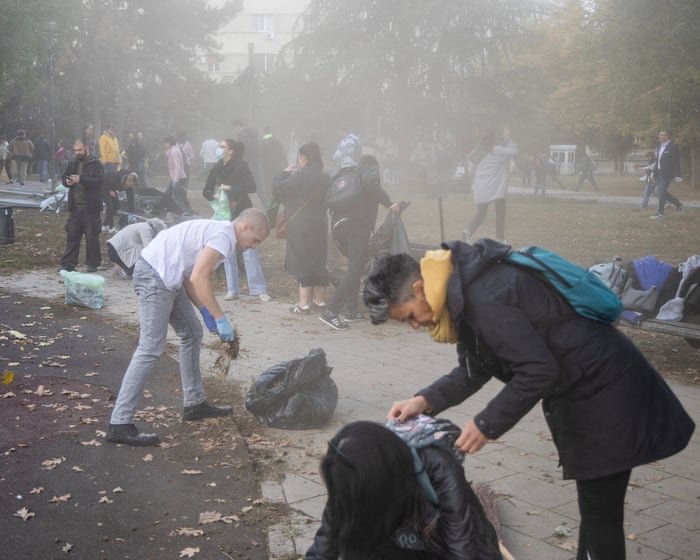
The Student List has taken a decisive lead in Serbia's early parliamentary election. It was formed by the student-initiated protest movement against the government. With 97% of polling stations counted, as cited by the BBC, it had won 52.7% of the vote. The party SNS received 39.2% and lost substantial ground. The result shows that the protest movement has turned public discontent with the government into electoral support.
From protests to the ballot box
The early election was called by Aleksandar Vučić, who had served two terms as president. Shortly afterwards he resigned from that post to run in the vote. He hoped to return as prime minister, a post he left in 2017. The election followed two years of protests. They began after a canopy collapsed at a railway station in the city of Novi Sad during reconstruction work. Sixteen people died in the accident. Protesters blamed the government for corruption, and the student-led activity grew into a nationwide mass movement.
Celebrations and pledges
On Sunday evening, Student List supporters celebrated in the streets of several cities. They danced and shouted "victory" and "Serbia is free." Cars sounded their horns, and in places fireworks accompanied the celebrations, Reuters reported. Candidate Radomir Saičić said in a victory speech that Serbs had proved "no obstacles are greater than their will." Lead candidate Ilija Srdanović told BBC Serbian that the movement hoped to "free the country from tyranny."
In its campaign manifesto, the list promised a tough stance on corruption. It also pledged to remove officials responsible for violence against protesters. It promised to stop the appointment of political party loyalists to the leadership of state companies, and to free public broadcasting from political control.
Uncertainty over future policy
Political analysts note that much is unknown about the policies the Student List will pursue. It brings together doctors, actors, athletes, academics and students, most of them without political experience. The EU Institute for Security Studies (EUISS) forecasts that in the short term Serbia's position on Kosovo, its stance on sanctions against Russia and its strategic relations with China will not change.