Serbia's Student List vows to clean up corrupt institutions after election win
The Student List, a student-led movement that won Serbia's parliamentary election on Sunday, says anti-corruption work and the removal of senior security officials will be central to its time in government. It also wants cases linked to the Novi Sad station canopy collapse reopened or sped up.
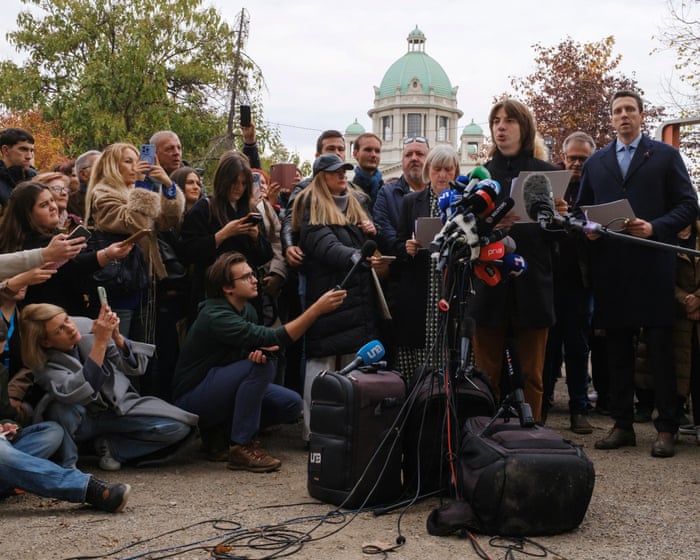
On Thursday, members of the Student List gathered in Pioneers Park in Belgrade, opposite Serbia's national assembly. The direct democracy movement won a surprising but decisive victory in Sunday's parliamentary election over President Aleksandar Vučić and his Serbian Progressive party (SNS), which have governed for 14 years. The candidates said their priority would be cleaning up institutions that, in their view, have increasingly damaged the lives of Serbs.
Demands for the security services
Student List representatives called for the dismissal of several senior law enforcement officials, including the heads of the criminal police, the paramilitary gendarmerie and an anti-terrorism unit. Candidate Svetlana Stanarević accused the officials of breaking the law. She also urged the director of Serbia's internal intelligence agency to resign, saying he ran it as "a party security service, not a state security service".
The movement also backed "reopening or expediting" cases linked to the disaster that sparked the student protests. Sunday is the second anniversary of the collapse of a canopy at a renovated railway station in Novi Sad, Serbia's second city, which killed 16 people. No one has yet been convicted.
How the movement will operate
Candidate Iva Marković, a political ecologist, said honest public servants could now do their jobs free of political pressure, with prosecutors prosecuting and police investigating. The Student List is not a traditional party: it has no leader or hierarchy, and once the elected MPs are sworn in, the students will have no direct control over them. The MPs signed a pledge to follow the movement's programme, and student assemblies will act as advisers or supervisors.
Slobodan Tomić, a political scientist at the University of York, said he could find no comparable example anywhere. Borko Stefanović, who opposed Slobodan Milošević in the 1990s, recalled that the democratic coalition that won in 2000 squandered its early promise, and urged swift legal justice.
The organisers of the Exit music festival, who moved this year's event abroad in protest at Vučić's policies, confirmed it will return to Novi Sad next year.