Protesters set fire to migrant camp in Ceuta, clash with police
Protesters in the Spanish enclave of Ceuta set fire to a migrant camp and clashed with police on Thursday, a month after a mass migrant influx from Morocco. Locals demand migrants and Red Cross workers leave, blaming the government for mishandling the crisis.
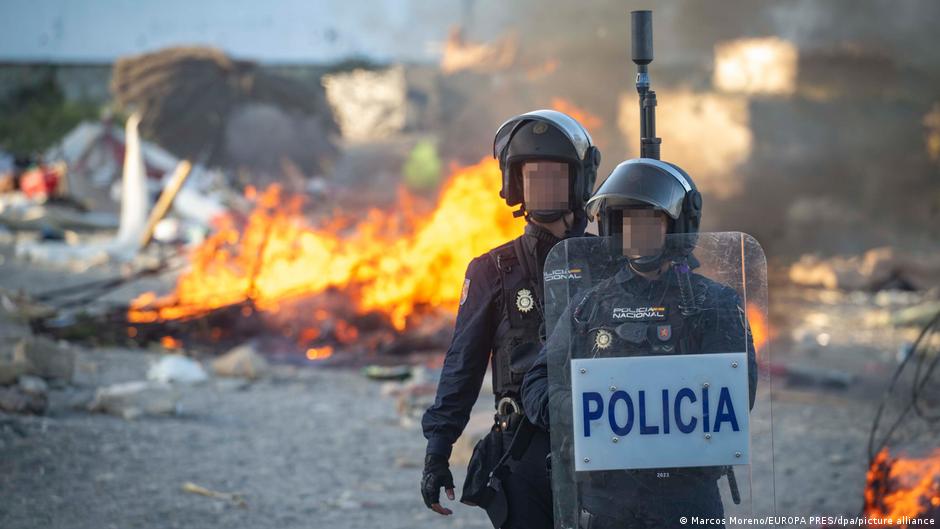
Protesters in the Spanish North African enclave of Ceuta set fire to a migrant camp on a beach on Thursday and clashed with police, television footage showed. Demonstrators were seen throwing objects into the flames while police pushed them back, forcing migrants to retreat onto a pier.
Earlier the same day, a crowd of about 70 people attacked a military vehicle with stones and other objects, a Ceuta police spokesman told AFP. Local residents also tried to block Red Cross vehicles from reaching the beach, where the organization distributes food to migrants. Protesters waving Spanish flags chanted for migrants to leave and for the Red Cross to get out.
How many migrants remain
The unrest comes a month after more than 70,000 migrants entered Ceuta irregularly in July, hoping to continue on to mainland Europe. Most have since returned to Morocco, but several thousand remain, living on the streets or the beach. Spain's national government estimates fewer than 7,000 migrants are still in Ceuta, while local officials put the figure at 10,000 or more. Ceuta itself has a population of roughly 84,000.
Pressure mounts on Madrid
The Spanish government faces growing criticism over its handling of the situation. The conservative opposition accuses left-wing Prime Minister Pedro Sanchez of inaction and of abandoning Ceuta's residents. Madrid has recently sped up efforts to identify migrants and determine who will be returned to Morocco, and has approved extra funding for unaccompanied minors entitled to special protection.
The crisis, unfolding ahead of general elections next year, has widened political divisions in Spain, with conservatives calling for tougher migration policies. July's mass arrivals also stirred tension within the European Union over how to handle the situation in Ceuta.