Sightline Intelligence and Vantor Team Up on Drone Navigation Without GPS
US company Sightline Intelligence is working with special intelligence provider Vantor to help military drones navigate and identify targets when GPS is disrupted. It has also launched a software platform called VISTA.
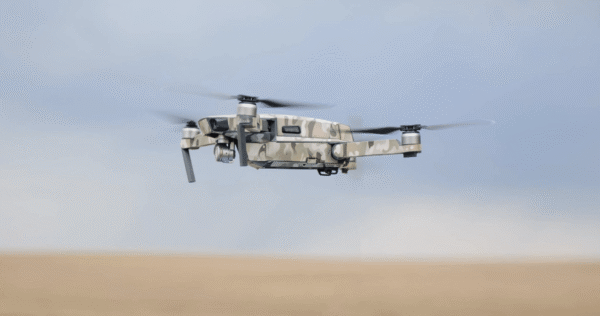
Sightline Intelligence, a Portland, Oregon-based company that develops visual intelligence for unmanned systems, has teamed up with Vantor, a special intelligence provider, to combine their technologies. The goal is to let military drones navigate and identify targets when GPS is disrupted. This matters because modern drone warfare depends heavily on getting aircraft to their targets even as the enemy tries to disrupt communication links.
Sightline CEO Jonathan Atwood told DroneLife that over the past year customers have made many requests for capabilities in GPS-denied environments, namely visual navigation that does not use GPS.
Lessons from Ukraine
Atwood pointed to recent events in the war in Ukraine, where Ukrainian forces experienced degraded signals from SpaceX's Starshield and Starlink satellite services. The restrictions capped connectivity for terminals moving faster than 100 mph, which severely hampered high-speed drone operations. In Atwood's words, this limits an operator's ability to fly a drone beyond friendly lines.
Combining Vantor and Sightline capabilities
The partnership pairs Vantor's satellite-enabled Raptor visual positioning software with Sightline's AiTR (Aided Target Recognition) onboard video-processing system. Atwood stressed the aim is to do this without sacrificing the company's existing core software.
The VISTA platform
Sightline also recently announced VISTA (Visual Intelligence & Situational Threat Awareness), a software platform that places its onboard video processing and vision intelligence in a modular structure to make them easier for customers to access and configure. It runs on the drone between the camera and the operator's screen, processes electro-optical and infrared feeds at the same time, and stabilizes the image.
For combat missions, detect-and-track modules let operators spot and follow multiple objects at once. The AiTR module, introduced last year after SightLine Applications merged with Australian defense firm Athena AI, provides in under 100 milliseconds additional attributes about what the operator sees, such as whether a person wears camouflage or carries a weapon.
Commercial use and ethics
About 95 percent of the company's production targets the defense market, though some products are classed as dual-use, non-ITAR technology. Atwood said the company ensures humans make all critical decisions.


