Scouts rank Latvian defenseman Šmits atop Rangers prospect list
A media outlet's ranking of New York Rangers prospects placed Latvian defenseman Ābols Šmits in first place. Team officials and scouts praised his unusual maturity and defensive skills, while debating whether he should join the NHL immediately or first refine his game in the AHL.
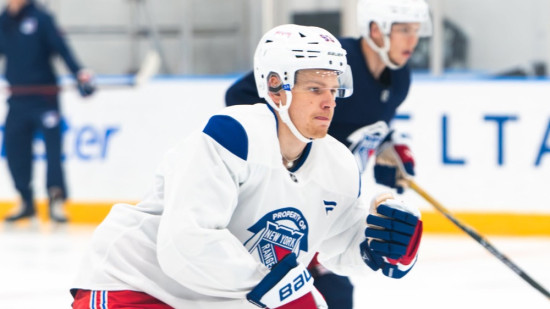
A recent prospect ranking has placed Latvian defenseman Alberts Šmits at the top of the New York Rangers' prospect list. Ranked behind him is 20-year-old Canadian forward Liam Greentree, who won bronze with Canada's U20 team at last season's world junior championship and captained the Ontario Hockey League's Windsor Spitfires. Third place went to center Cole Bodin, who also won junior world championship bronze, captained the Barrie Colts, and finished as the OHL playoffs' top scorer with 29 points in 15 games.
Experience beyond his years
Rangers president Chris Drury noted that few players Šmits' age have already competed in two professional leagues, the Olympics, and a world championship. Player development director Tanner Glass echoed the sentiment, saying the Latvian shows habits typical of more seasoned players — in how he controls the puck, moves it forward, and commands the ice with confidence in his own abilities.
Debate over offensive potential
Before the draft, Šmits was regarded as the most NHL-ready defenseman available, though some questioned his offensive upside. An anonymous scout from an Eastern Conference team explained that Latvia's national team is often forced into a defensive posture in international tournaments, limiting Šmits' chances to showcase his offensive game except against weaker opponents. The scout pointed to last year's U18 world championship, where Šmits demonstrated clear offensive mastery.
Another scout questioned whether jumping straight to the NHL would be the right move. While acknowledging that Šmits is physically mature and could likely handle the NHL, the scout suggested spending time in the AHL would let him play with the puck more often, experience a wider range of game situations, and develop with less outside pressure.