Slaidiņš: Plans Rehearsed in Belarus Drills Matter More Than Troops Near the Border
Major Jānis Slaidiņš, a Zemessardze staff officer, told TV24 that the scenarios played out in Belarusian military exercises matter more than visible troop movements. Meanwhile, Latvia's government plans to extend visa restrictions on Russian and Belarusian citizens to the end of 2027.
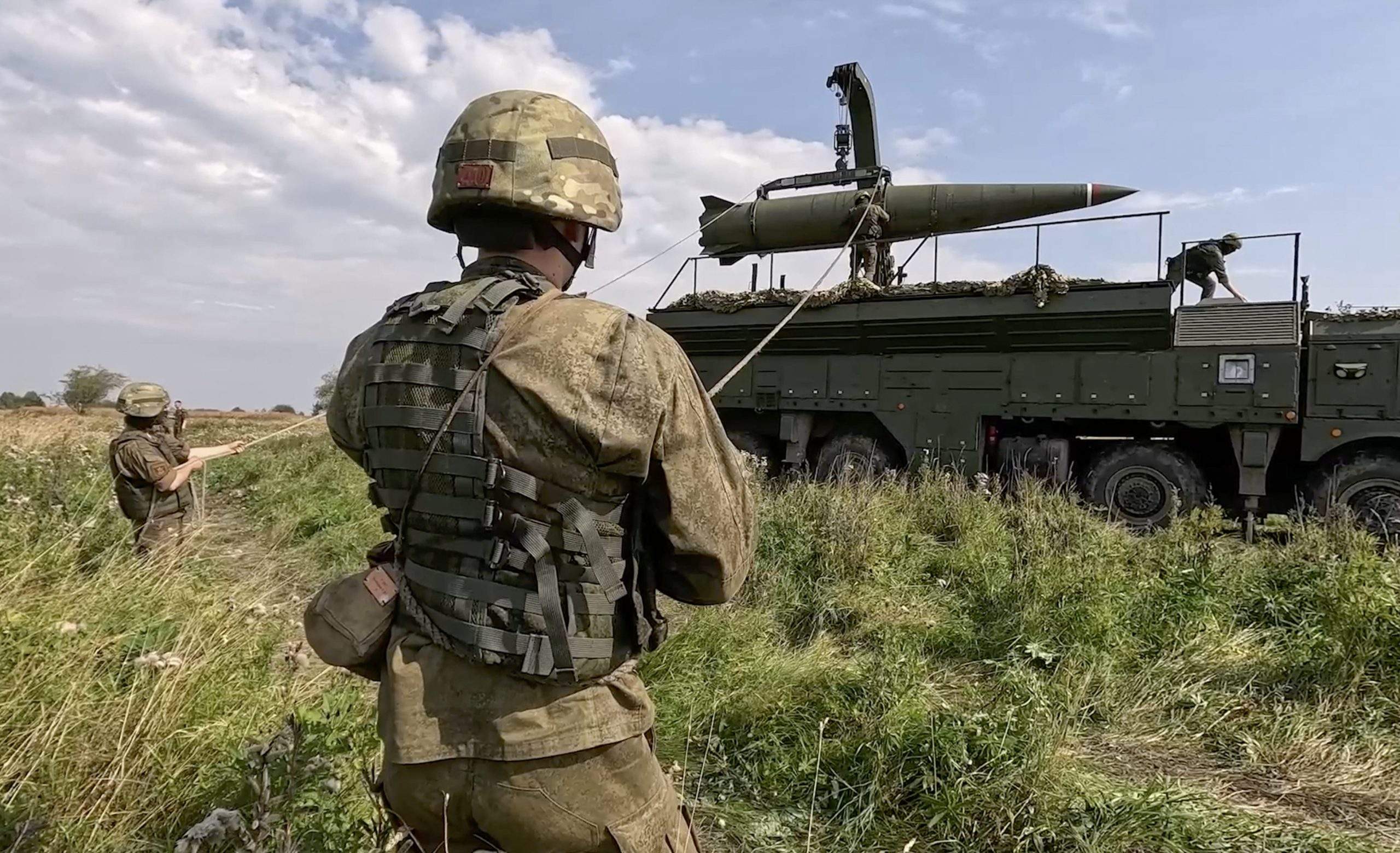
Major Jānis Slaidiņš of Latvia's National Armed Forces (NBS) and a staff officer of the Zemessardze, the volunteer National Guard, explained on the TV24 programme “Aktuālais par karadarbību Ukrainā” what to watch when assessing Belarusian military exercises near the Latvian border. In his view, the tasks and scenarios rehearsed during the drills are more important than what is visible from the outside.
What is rehearsed in exercises
Slaidiņš said units in military exercises typically work through various attack and defence plans. Some of this is done on maps, modelling how events could develop, and some in practical training, where soldiers practise deploying and carrying out tasks.
He argued that the key point is not the visible movement of troops or the deployment of a unit near the border. What matters far more is which plans are being played out and which courses of action are considered. Military planning weighs different options, including the likely and the most dangerous scenarios.
The major also said that a unit being present or moving near the border does not in itself indicate a direct threat to Latvia at present. “The fact that a unit is exercising there certainly does not pose a threat right now,” he said.
Extension of visa restrictions
The news agency LETA reports that the government plans to extend, until 31 December 2027, restrictions on accepting visa applications and on entry to Latvia for certain categories of Russian and Belarusian citizens. This follows from the annotation to a draft regulation prepared by the Foreign Ministry.
The ministry says that since Russia's full-scale invasion of Ukraine in February 2022, intelligence, hybrid and other security risks have grown in the Baltic Sea region. It states that Belarus supports the invasion by letting Russian forces use its territory, infrastructure and airspace, and uses organised flows of illegal migrants against the borders of Latvia, Lithuania and Poland. State security institutions, however, assess that the level of military threat to Latvia has not changed and that Russia currently poses no direct military threat.
The draft also clarifies the legal basis in line with the new Immigration Law, which entered into force on 15 September.


