World's busiest spaceport set to quiet down as SpaceX shifts Falcon 9 to customer missions
SpaceX has wrapped up its run of Starlink launches from Florida aboard Falcon 9, whose first-stage booster just set a fleet record with its 37th flight. All future Falcon 9 and Falcon Heavy launches from the site will now carry customer payloads instead.
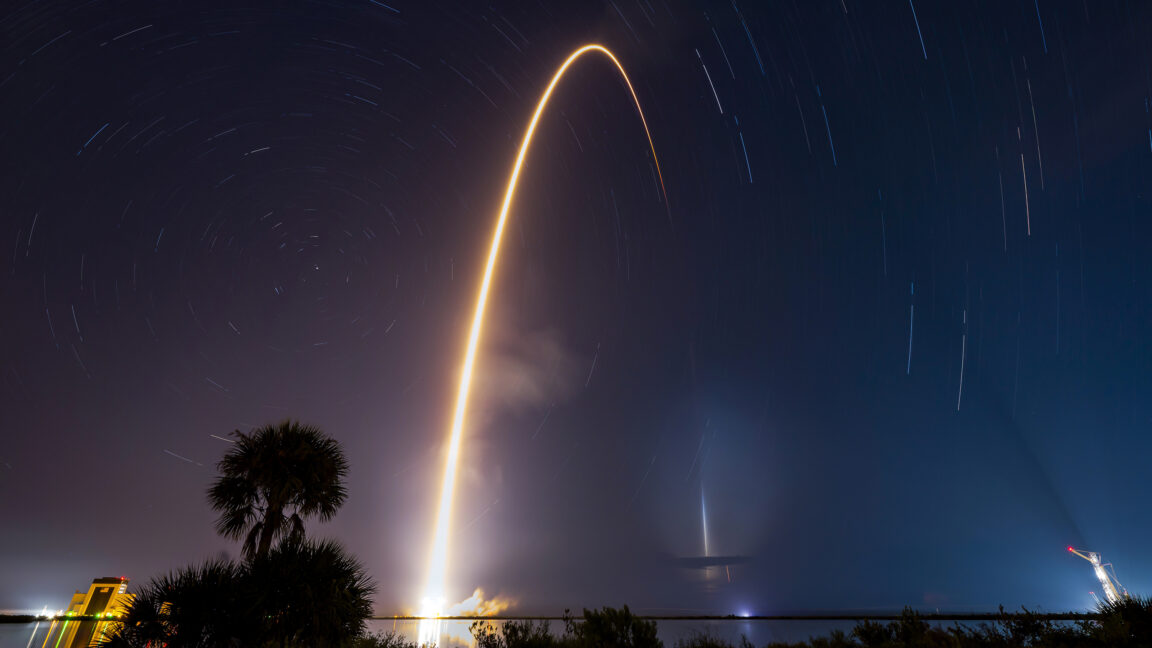
Tuesday's Falcon 9 launch from Cape Canaveral stood out for more than one reason. The rocket's first-stage booster completed its 37th flight, a new record for SpaceX's fleet. Because the launch happened shortly before sunrise, skywatchers along the East Coast were able to spot the rocket streaking northeast across the sky.
The mission also closed out a chapter for the launch site: it was the last of roughly 260 Starlink missions SpaceX has flown on Falcon 9 from Florida. Going forward, every Falcon 9 and Falcon Heavy launch from Florida will carry payloads for outside customers rather than SpaceX's own satellite constellation.
What's next on the pad
The next launch is scheduled for August 30, when a Falcon Heavy will lift off from Launch Complex 39A at Kennedy Space Center carrying NASA's Nancy Grace Roman Space Telescope. A Falcon 9 flight in mid-September will follow, delivering the next four-person crew to the International Space Station.
Starship looms
SpaceX leadership intends to eventually retire Falcon 9 in favor of Starship, at least for commercial missions, a plan that has stirred concern among customers about the availability of reliable launch capacity after 2028. The company still says it aims to begin flying Starship and Super Heavy from Launch Complex 39A before year's end, though that looks unlikely given how much site preparation remains and the absence of any clear signs that Starships are being moved from SpaceX's Texas factory to Florida. A debut at Kennedy Space Center by mid-2027 appears more realistic.
Starship is designed to carry as many as 60 Starlink V3 satellites per launch — a new generation that is larger, heavier and more capable than the V2 satellites currently flying on Falcon 9. SpaceX plans to use its next Starship test flight, Flight 14, to loft the first Starlink V3 satellites into low-Earth orbit from Starbase, Texas, possibly as soon as next month.