SpaceX rocket piece set for unintentional moon impact on Wednesday
A four-tonne piece of a SpaceX rocket that has been drifting in orbit since last year will unintentionally crash into the moon on Wednesday, creating a new crater but posing no danger to Earth.
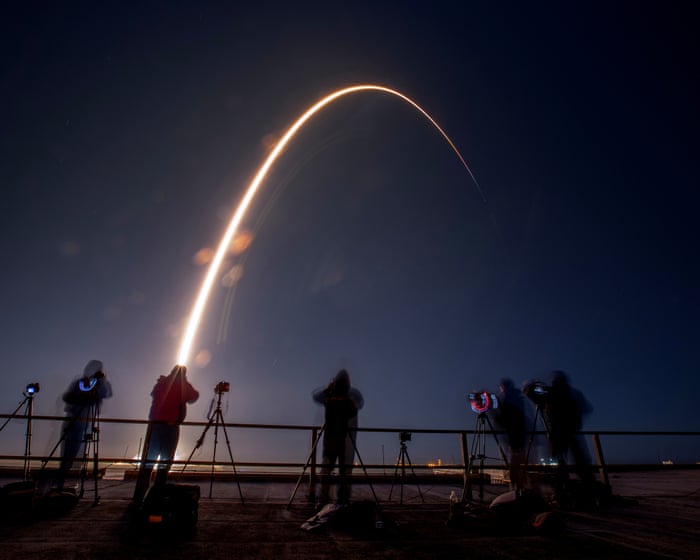
A four-tonne piece of a SpaceX rocket that has been adrift in orbit since last year is expected to crash into the moon on Wednesday in an unplanned collision. The impact will not endanger Earth, but it will carve a new lunar crater and offer scientists a chance to gather data.
According to Nasa, the object is the second stage of a Falcon 9 rocket that launched a Firefly Aerospace lunar lander in January 2025. It is set to hit the surface at 06:35 GMT while travelling at 5,400 mph (8,690 km/h). The collision is expected to create a crater roughly 60 feet (18 metres) wide and 12 feet (4 metres) deep and fling dust and rock outward.
The rocket stage will strike the Einstein crater on the moon's western limb, a region often difficult to observe from Earth. Nasa said it will try to image the site before and after the impact. Jimi Russell of Nasa said the event poses no danger to Earth and the collected data could help improve methods for tracking objects in space.
Space rocket upper stages usually fall back into Earth's atmosphere or plunge into the ocean after deploying their payload. This stage, however, was left in space because the lunar mission required extra thrust. It had dumped its remaining fuel and cannot be controlled. Earlier this year, astronomers determined its orbit would end in a lunar impact.
Bill Gray, who developed widely used astronomy software and reported on the trajectory in April, said the impact is of minor scientific interest but highlights careless disposal of space hardware. There is no danger to anyone, he said.
Unintentional moon impacts are uncommon. A Chinese rocket stage hit the moon in March 2022 after a lunar test flight. Nasa deliberately crashed a rocket stage into the moon in 2009 to study the ejected material. Several attempted soft landings have also failed recently, including Russia's Luna-25 in 2023, India's Chandrayaan-2 in 2019, and Israel's Beresheet that same year, which carried tiny tardigrades.
SpaceX reported a smaller-than-expected loss and higher revenue in its first quarterly report as a public company on Tuesday, but shares fell as investors remained sceptical about its ambitious promises.