SpaceX gets US approval for a million satellites to host AI data centers in space
The US Federal Communications Commission has approved SpaceX's "Starmind" project, which envisions up to one million satellites hosting AI data centers in orbit. Experts point to energy benefits as well as environmental and astronomical risks.
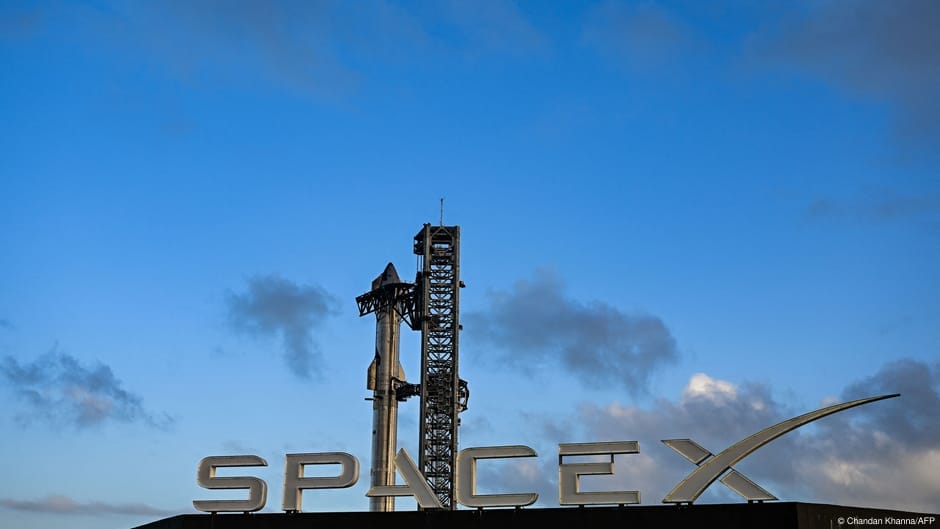
The US Federal Communications Commission (FCC), the regulator overseeing communications and satellites in the country, has approved "Starmind," a project by Elon Musk's space company SpaceX. It envisions a network of up to one million satellites hosting artificial intelligence (AI) data centers. The decision matters because it could greatly expand AI computing capacity while significantly changing conditions in Earth orbit.
Deadlines
The FCC requires 10%, or 100,000, of the authorized satellites to be in orbit by 2035, and 50% by 2038. The full constellation must be completed by Nov. 25, 2040. Laura Revell, a professor of atmospheric chemistry at the University of Canterbury in New Zealand, says that would mean launching roughly eight satellites per hour.
Arguments in favor
Ulrich Speidel of the University of Auckland explains that space offers more solar energy: depending on the orbit, a satellite is in sunlight for more than half of each day, and there are no clouds. The International Energy Agency estimates that electricity use by AI data centers could more than double to 945 terawatt-hours a year by 2030. Data centers on Earth also use large amounts of water for cooling, ranging from 313 billion to 764 billion liters according to one study.
Doubts and risks
Cooling in a vacuum is difficult, because heat can only be removed by radiating it away. Physicist Richard Easther believes workable solutions exist, but says the project is "at the very edge of technical feasibility."
Revell warns about the effect of rocket emissions on the ozone layer and about satellites burning up in the atmosphere, whose long-term effects are unknown. Astronomer Michael Brown notes that the number of active satellites would grow more than 50-fold, raising the risk of collisions and of Kessler syndrome. Easther says the large solar panels could seriously hamper astronomical observations. The FCC reportedly dismissed environmental concerns as outside its purview.