Spain investigates causes of deadly train crash in Toledo province
Spain is investigating a train collision in Toledo province that killed 69 people. An interim report says the high-speed train was travelling at 160–200 km/h when it hit a stationary train.
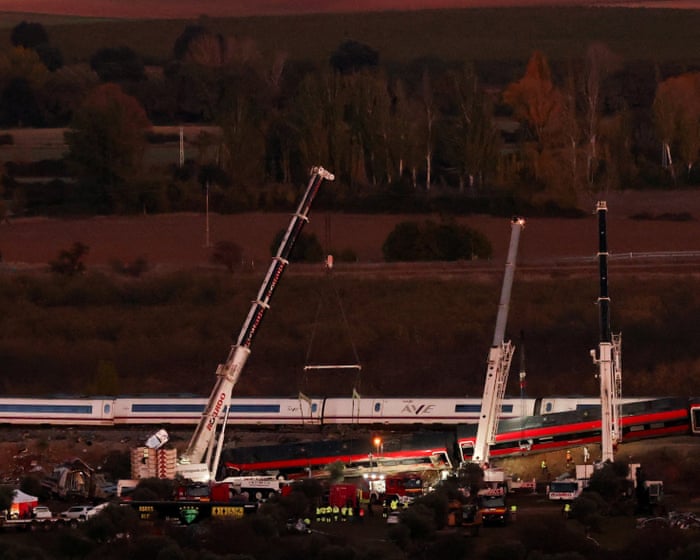
Spain is continuing to investigate what caused a train crash in Toledo province that killed 69 people and injured many more. A high-speed Ave train collided with a stationary train in the Urda area. The accident also carries political weight, as parliamentary elections are due in the country next month.
What the interim report says
The independent body investigating the crash has issued a first interim report. It confirms that the Ave train was travelling at between 160 and 200 kilometres per hour at the moment of impact. It struck a train that was stationary directly ahead of it.
Much public attention has gone to leaked recordings of conversations between the operations centre and drivers affected by a signalling failure in the Urda area. Even so, the full investigation is likely to take weeks or even months. The interim report states that investigators have so far been unable to speak to some of the key witnesses.
Political impact
The Guardian's Spain correspondent Sam Jones writes in his analysis that the crash could undermine the recently renewed momentum of Prime Minister Pedro Sánchez. In his assessment, rail safety now threatens to overshadow Sánchez's attempts to defend his record and stay in office.
Other developments in Europe
Further protests are planned in France and Italy, as people voice frustration over education, the cost of living and other issues. French interior minister Laurent Nuñez warned of "a very high risk" of violent disorder this weekend. He blamed "the radicalised far-left" and the Yellow Vest movement for urging more people to join demonstrations with "quite radical" messages. In Italy, the student movement says "massive" student protests are expected in Rome and Milan.
Meanwhile, Canada and the European Union are holding a summit in Montreal to discuss their future relationship, including a possible "associate membership" or another form of partnership. Canadian Prime Minister Mark Carney and European Commission President Ursula von der Leyen are due to speak.