Spain and Italy agree to end mutual border checks
The interior ministers of Spain and Italy agreed on 22 October to lift checks on travellers at airports and ports, introduced after thousands of migrants stormed Spain's North African enclave of Ceuta. The two countries also agreed to expand information sharing to protect the Schengen area.
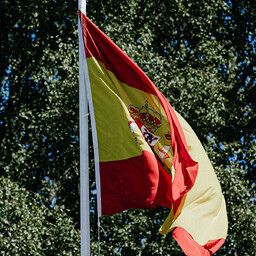
Spain and Italy agreed on 22 October to stop checking people travelling between the two countries at airports and ports. The deal was reached in a phone call between the interior ministers of Italy and Spain, according to Spanish public broadcaster RTVE. It followed a meeting between Italian Prime Minister Giorgia Meloni and Spanish Prime Minister Pedro Sánchez at a recent European Union summit in Brussels.
Italian authorities introduced selective checks on arrivals from Spain in early August. The trigger was the events of 30 and 31 July in Ceuta, a Spanish enclave in Africa, where tens of thousands of migrants from African countries broke through without permission to stay in the EU.
A dispute between the two states
During the crisis, Italy accused Spain of insufficient commitment to protecting the EU's shared external borders and announced the checks. This was despite the fact that it is not possible to reach the European mainland from the Ceuta enclave without a document check. Spain responded with the same measures against Italy. The checks regime was extended on 15 September.
According to Italian authorities, as of 31 August (no later figures exist), documents of 180,000 people arriving from Spain were checked over one month. Only 31 were refused entry, and six more were arrested. Spanish authorities did not publish statistics.
What was agreed
Spain's Interior Ministry said the decisions were based on a thorough analysis of the situation. The agreement also includes expanded information sharing to protect the security of the Schengen area, the group of countries without internal border controls.
The situation in Ceuta
An estimated 70,000 or more migrants broke into Ceuta at the end of July. Most left the city, several thousand remained, and many applied for asylum. Spanish authorities cannot deport them collectively, as each application must be examined individually.
Several EU countries accused Sánchez's left-wing government of attracting illegal migrants with a lenient policy. Spain's authorities, in turn, spoke of foreign information campaigns, in which, by their account, Russia and Israel were involved, and of the clearly organised nature of the events, but did not make direct accusations against anyone.