International Google Pixel Phones Differ from US Models – Here's How
Google Pixel phones sold outside the US differ mainly in SIM card support and 5G compatibility, while hardware and software are largely identical.
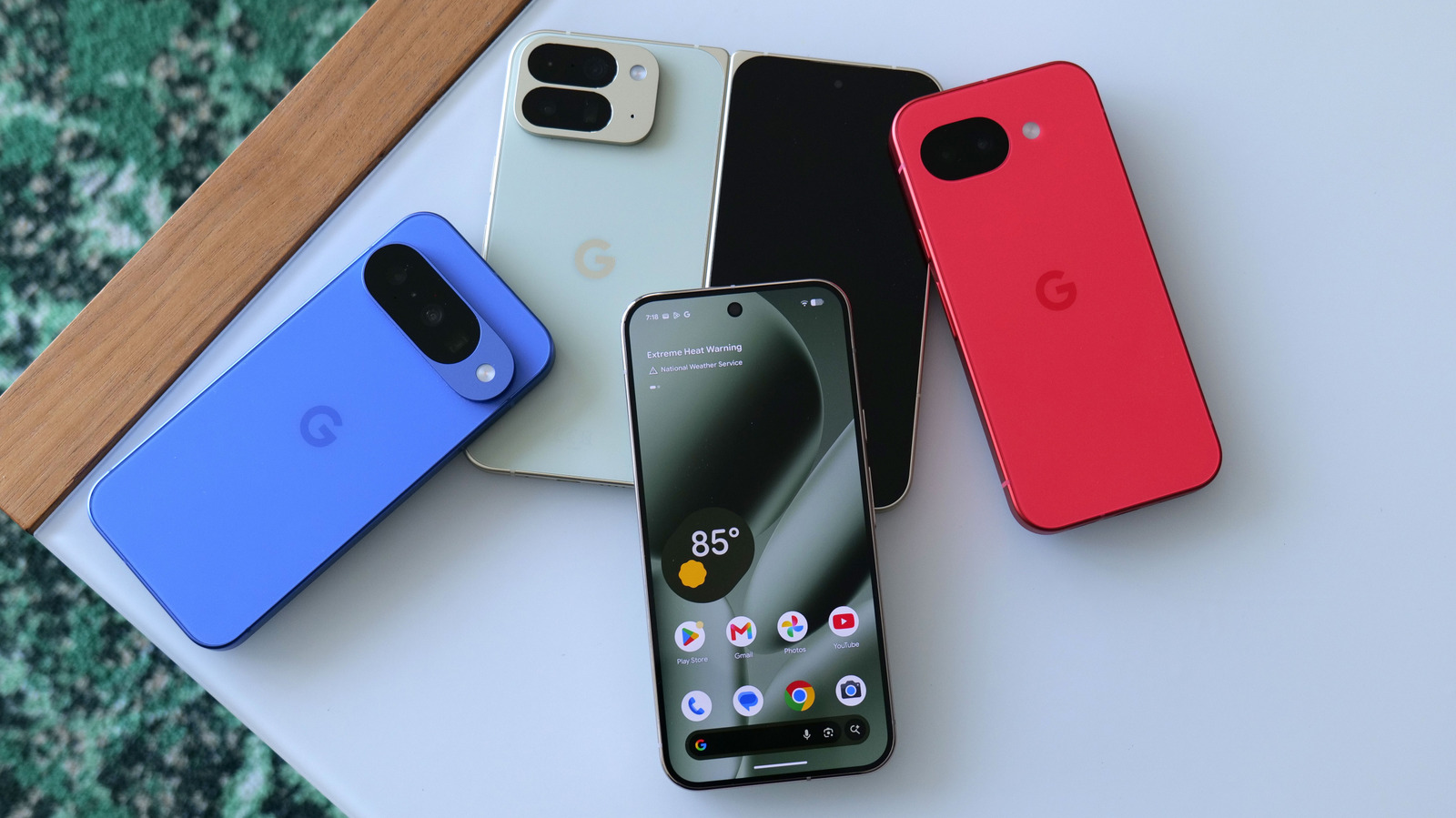
Google is one of the world's largest smartphone manufacturers, and Pixel devices are sold in many regions outside the US. Like other makers, Google tweaks its products to comply with local regulations and preferences. There are a few differences between US and international Pixel models.
Hardware
Unlike Samsung phones that often vary in processor (Snapdragon vs Exynos) by region, Pixel hardware is nearly identical. Most recent international Pixels use the same Tensor chips, memory, and storage as US versions, along with identical camera sensors, display tech, and charging capabilities. For example, the base Pixel 10 features a Tensor G5 processor, 12 GB RAM, 128 GB or 256 GB storage, a 6.3-inch Actua OLED display, and a rear camera with 48 MP main, 12 MP ultra-wide, and 10.8 MP telephoto sensors. Physical design, materials, and color options are also the same.
The only major hardware difference is that US models (Pixel 10, Pixel 10 Pro, Pixel 10 Pro XL) are eSIM-only, while international models still include a physical Nano SIM slot. Google says this is due to widespread eSIM support among US carriers, and the freed space is used for mmWave 5G components. An exception is the Pixel 10 Pro Fold, which has a physical SIM tray in all versions.
Software
Software differences are minor. Google phones are available in over 30 countries and support over a dozen languages, so localizing new features takes time. Often, new tools launch first in English in North America while Google ensures regulatory compliance and usability in other markets. For instance, Magic Cue, which uses AI to surface important information, is currently available in the US, Canada, India, the UK, Japan, and a few other countries, with expansion ongoing.
Cellular Support
The biggest difference is cellular compatibility. US carriers like Verizon have heavily invested in mmWave 5G, which offers very high speeds but shorter range and lower penetration. Thus, international models often lack mmWave support to keep costs down and ensure optimal performance. The US also has stricter testing requirements. Overall, Pixels are quite similar across regions; if you're moving, it's often easiest to buy a phone in the country where you'll live.