Stanford graduates push back against AI: protests and hopes
At Stanford University, Google CEO Sundar Pichai's speech was interrupted by student protests against AI. Graduates express concerns about job futures and ethics, as well as hopes for the technology's potential.
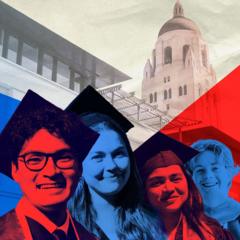
Stanford graduates hold mixed views on artificial intelligence. Some see it as an opportunity, others as a threat. Google CEO Sundar Pichai, a Stanford alumnus, faced protests as students walked out during his commencement address. Protesters carried signs reading "ICE spies with Google AI" and waved Palestinian flags, criticizing Google's contract with the Israeli military.
Graduates voiced concerns about AI's impact on the job market. A Federal Reserve Bank of New York study found recent graduates struggling to find work, while a Stanford study showed employment declines in AI-exposed fields like software development. However, most interviewed graduates had jobs lined up or planned further studies.
Stanford is a hub for AI research—the term "artificial intelligence" was coined there. Many AI leaders, including OpenAI co-founder Sam Altman, are linked to the university. Graduate Ifdita Hasan, an AI major, is optimistic but notes that skepticism often accompanies new technologies. Another graduate, Atash Heil, fears uncertainty and the speed of AI-driven change, especially in art.
Teaching assistant Lucy Zimmerman observed that AI encourages "cognitive offloading"—students rely on technology rather than solving problems themselves. Some courses have reintroduced proctored exams. Despite concerns, she plans to work as a software engineer at a startup.
Graduate Colbey Harlan uses AI for creative writing but worries about data center resource consumption. "AI is cool, but can we stop progressing it?" he asks. Others, like Harry Kaplan, see Stanford as a center of innovation and are proud of its legacy.
Pichai's speech occurred over the weekend, and he joked about being advised not to mention AI. However, his words were partly drowned out by chants from protesters. Afterwards, some students attended an alternative ceremony featuring pro-Palestinian activist Mahmoud Khalil.