Sudan: Fears of atrocities as RSF surrounds strategic city
Paramilitary Rapid Support Forces (RSF) are massing around the government-held city of el-Obeid, prompting international warnings of imminent mass atrocities reminiscent of the El Fasher massacres.
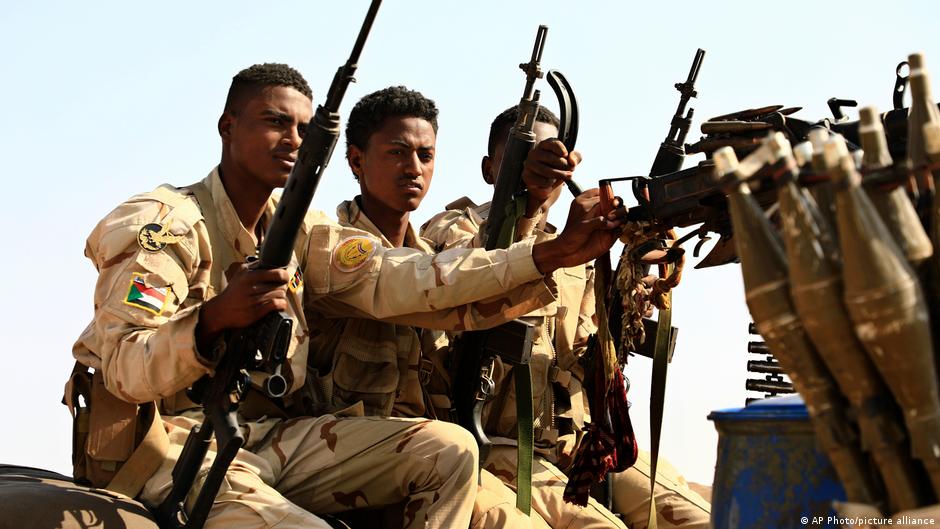
The next major front line in Sudan's war is likely the strategically important city of el-Obeid in North Kordofan. The UN Security Council, several European countries and the United States have flagged "the imminent risk of mass atrocities" as increasing numbers of RSF troops deploy around the city. The assumption is the RSF is preparing a ground offensive to retake el-Obeid, which has been under the control of the Sudanese Armed Forces (SAF) since February 2025.
The war began in April 2023 when a rift between two rival generals – Abdel-Fattah Burhan (SAF) and Mohamed Hamdan Dagalo (RSF) – escalated. Fighting has divided the country: SAF holds the north and center, including the capital Khartoum, while the RSF controls western Darfur and parts of the south. Sudan, rich in oil, gold and agricultural land, has become the world's largest humanitarian and displacement crisis. According to the UN, over 14 million people have been displaced; estimated deaths range from 40,000 to 250,000.
Why el-Obeid matters
El-Obeid, with a population of about 500,000, sits at a crossroads between central Sudan, Khartoum and western Darfur. It is a key gateway for troop movements, military and humanitarian supplies, and hosts a large SAF military base and airfield. Researcher Hager Ali of the GIGA Institute says if the RSF takes el-Obeid, they would gain urban infrastructure, the lucrative gum arabic trade, and a forward base for drone operations. Drones have become a key weapon; the UN reports over 1,000 civilians killed in drone strikes from January to May 2026. The rainy season starting in July makes drone trajectories less predictable, making a closer base even more essential.
Fears of repeating 'horrors of el-Fasher'
A UN spokesman warned earlier in June: "We must not allow the horrors of el-Fasher to be repeated in el-Obeid." The Darfur city of el-Fasher became synonymous with mass atrocities after RSF fighters besieged it for 18 months and killed about 6,000 people over three days last October – an attack the UN said bore the "hallmarks of genocide." Kenneth Roth, former executive director of Human Rights Watch, said: "We have every reason to fear that the RSF will continue their mass atrocities if they are allowed to take el-Obeid." He noted the RSF has shown utter disregard for civilian life, and deliberately killing civilians appears to be their primary aim.
Amgad Fareid Eltayeb, adviser to Sudan's Transitional Sovereign Council, sees a repeat of the script used before el-Fasher: "We are watching the same script, reformed again over el-Obeid." He argues the warnings were never meant to lead to prevention. He calls for designating the RSF a terrorist organization to cut off support from the United Arab Emirates, which he accuses of fueling the conflict. The UAE denies any involvement.
Justice, sanctions and accountability
Philippe Dam of Human Rights Watch urges immediate sanctions against RSF leadership for their command responsibility. The US sanctioned both generals in January 2025 and has sanctioned multiple individuals on both sides. The EU also imposed sanctions, but the UN has not sanctioned the generals or their organizations as a whole. Eltayeb argues that every statement mourning an atrocity without naming its financier is not prevention but avoidance.