IMF Warns Attacks on Saudi Arabia Could Hurt Global Economy After Strike on Aramco Headquarters
The International Monetary Fund warned that attacks on Saudi Arabia could harm economies worldwide, after Yemen's Houthis struck the headquarters of oil giant Aramco in Dhahran.
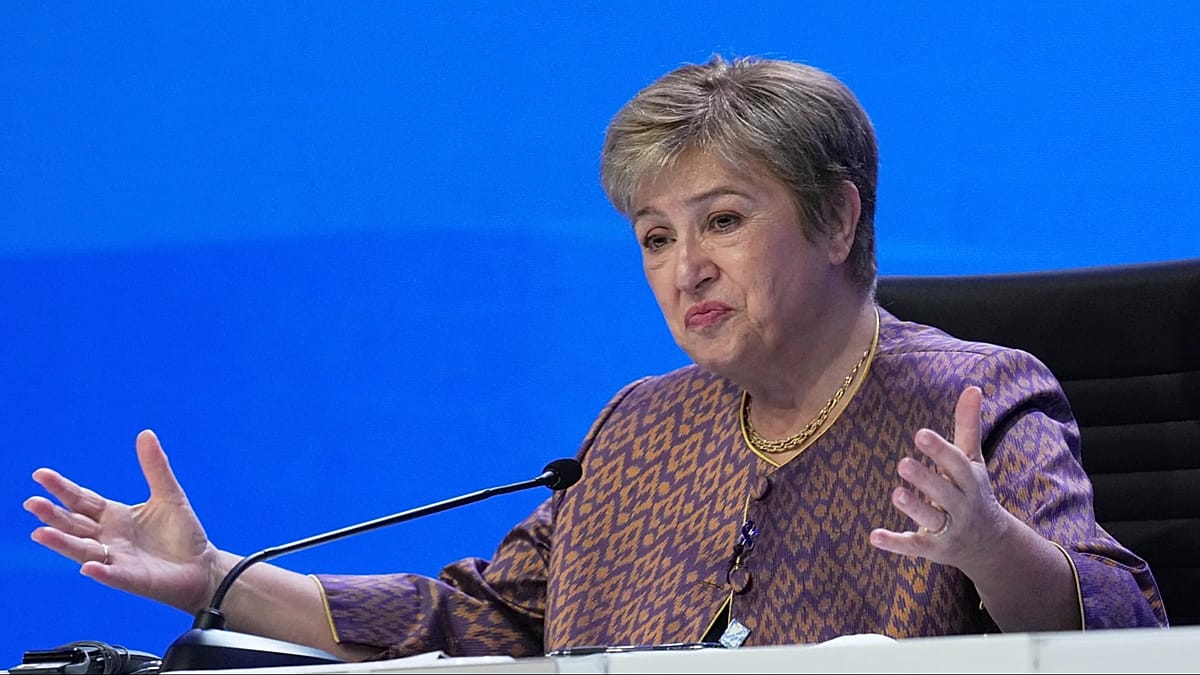
The International Monetary Fund (IMF), the body that monitors global financial stability, warned on Wednesday that attacks on Saudi Arabia could damage economies around the world. The warning follows a strike on the headquarters of oil giant Aramco in Dhahran on Tuesday evening, for which Yemen's Iran-aligned Houthis claimed responsibility.
IMF managing director Kristalina Georgieva pointed to Saudi Arabia's economic weight at the IMF and World Bank annual meetings in Bangkok. In her words, the developments carry potentially negative spillovers for everybody, everywhere.
What happened in Dhahran
Saudi Arabia's energy ministry said an administrative building was hit, causing a limited fire, with no deaths or injuries. A person with direct knowledge told Reuters the building's top three floors, including the office of chief executive Amin Nasser, were badly damaged. Two sources said operations at the complex were continuing as normal, though some staff had been told to work from home. Another said some work had shifted to offices abroad. Aramco oversees its rigs, refineries, export terminals and pipelines from a centre at the headquarters. The company did not respond to a request for comment.
The Houthis have also attacked Saudi airports amid renewed fighting with a Saudi-led coalition. Oil prices rose on Wednesday, with Brent crude above $106 a barrel, while Aramco shares fell 0.5% in early trading. Lufthansa has suspended flights to Riyadh up to and including 18 November. Saudi Arabia plans to let executives join its Future Investment Initiative conference online.
Economic outlook
Saudi Arabia's economy was already under strain from the Iran war and disrupted shipping through the Strait of Hormuz. The IMF expects a 3.3% contraction this year and 7.9% growth in 2027. The forecasts were published on Tuesday but prepared before Saturday's deadly attack on Riyadh airport. They assume the Strait of Hormuz will gradually reopen from March 2027, with shipping back to pre-war conditions by October.
The East-West pipeline carries oil to Yanbu on the Red Sea, letting exports bypass the Strait of Hormuz, which the IMF said reduced the damage compared with some neighbours. Georgieva added that efforts to develop non-oil businesses had also helped. She warned that poorer countries reliant on imported energy are among the hardest hit by rising costs and urged governments to help people facing higher food and energy bills.

/nginx/o/2026/08/17/17853274t1h01a9.jpg)